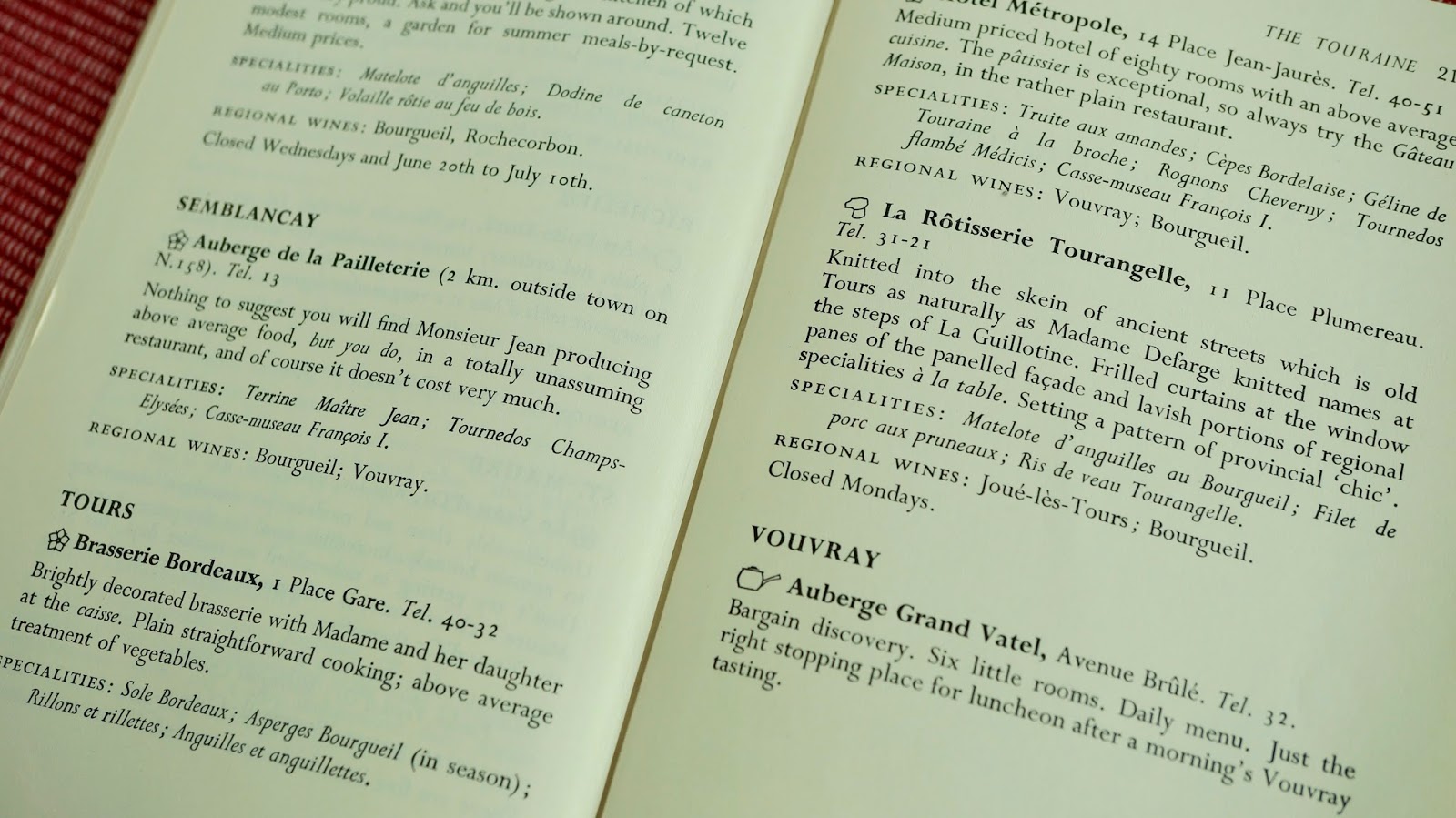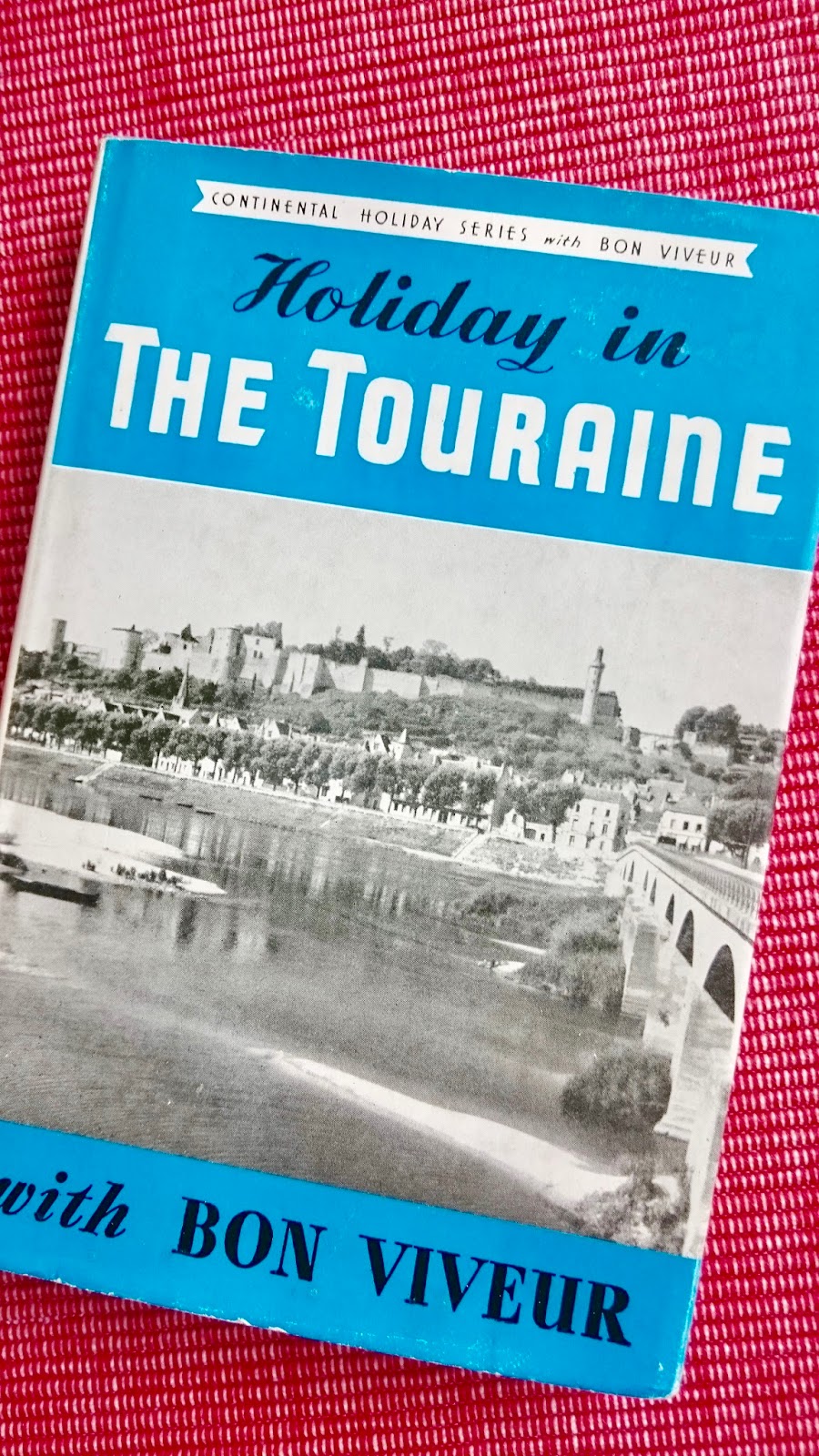
My mission - I just HAD to find the most celebrated hotel in Fanny's guidebook to the Tours - the rather splendid sounding Hôtel Metropole. She'd already mentioned it strongly in her guide to Wining and Dining in France. What might today's Gateaux de la Maison be? Would Fanny perhaps have tasted the very same one, in the very same setting? More details were given in the tour guide Holiday in the Touraine she published in 1956. With the address in hand, 14 Place Jean Jaunes, I set off to explore. A lack of data plan on my mobile meant I was transported back to the time that Fanny was writing. Just as in the 1950s, armed only with Fanny's guide, I had limited information, but a great supply of hope and belief.
A short walk from the Gare de Tours, the main square in the town centre appears to be undergoing a period of change. Regeneration we might call it. Many of the Grande Hôtels stand empty or have been re-propositioned with a variety of other uses. Surely the Hôtel Metropole would not have succumbed to such progress? The leafy square spreads out as if to make room for the expansive tram system which now strides the Rue Nationale, seemingly splitting the city in two. Stretching from north of La River Loire to the somewhat appropriately named (perhaps) Winston Churchill Boulevard in the south, the tram sees to be well used and smooth running. I never used it, preferring to walk.
In Place Jean Jaunes itself, people find comfortable spots in the various pavement cafés and those strange enclosed perspex spaces which many restaurants favour now, neither seemingly attached to the main restaurant nor flying absolutely solo. Islands of meeting and eating space. Without facilities. Fanny noted this was also the case in 1956, where celebrated chefs around the Touriane region told her 'we put the cooking and wines first, the ambiance and toilettes last', so it seems nothing has changed.
I wander round several times. Hôtel De Lille. Hôtel De L'Europe. Grand Hôtel. Hôtel De L'Universe. all there and all splendid buildings, giving the air of being THE 'place to stay' in town, just as Fanny suggested. Fanny noted that the Hôtel De L'Universe was plain to see in particular, even by the most myopic. So, I wasn't in need of an eye examination, but where was the glory of the Hôtel Metropole? Fanny was by now teasing me with details of their Crêpes Bordelaise, which apparently no-one, not even Fanny herself, can cook better that the chef there.
Hôtel Metropole had an ample eighty bedrooms, so would surely be in plain sight too, myopic or not. Wandering up and down Place Jean Jaunes in search of number 14 it did not appear to be so. Just as I was about to consult Fanny's guide to popular French phrases for weary travellers, No Spik French, and attempt to order a Daily Mail each day, or where to find the best dentist (as these are surely the essential phrases) in the hope that someone took pity on my French abilities and replied in English so I could ask about the Metropole, I saw it. Standing proud and smug, taunting me and jeering at me for not noticing it sooner. Also crushing me completely by having transformed itself into an H&M. The closest I could get to sharing a space where Fanny had been would be to buy a t-shirt.
Showing posts with label travel. Show all posts
Thursday, 8 June 2017
Monday, 5 June 2017
Je Suis Arrivé - Cradock En Tours #2
As I arrive in Tours in preparation for my Fanny presentation, I am greeted by the wonderful Gare De Tours. A spectacular square with fine, elegant buildings, intriguing side streets, smoking tabacs and enough bread and pastry tumbling out of the local boulangerie to keep me going for ever. Just as impressive as Fanny had said it would be. She told me that wherever I go, if I elected to follow her, she would have been sure to have been there before. Just a short hop to my hotel, which it turned out, had an unexpected Hollywood Red Carpet theme. I would spending the next few days in Ginger Rogers. I don't think Fanny had done that.
The town itself is easy to navigate with old streets lined with poky peek-holes. Bliss for a nosey person like myself. Fanny's advice was to seek out the Mayor, the Postman or the gendarme, and study their shape. If they are oval, ask them where to eat well. Fanny says to never, and she repeats never, follow Americans. Shunning both pieces of advice, I following the smell of food, I made my way along Rue Colbert which was lined with restaurant after brasserie, each setting out its stall in a friendly, familiar manner - letting the diverse menus speak for themselves. No pushy marketing or cajoling required. The choices were endless. Which small, square table enticingly set with wine glasses to sit at? I walked back and forth several times before settling on 'Aux Lapin Qui Fumé', after all the Smoking Rabbit seemed like the kind of place Fanny would have approved of.
Rue Colbert really was the perfect place to sit and watch Tours go by. A Tours perhaps different to the one visited by Fanny, but essentially the same. Fanny says to ensure I spend well on food, after all the sights are for free. She is not wrong. Opposite was a small vegetarian café - Shanti - which gave it's hours as Monday to Friday 8:30am - 2pm, but I never saw it open. A more elegant neighbour, Restaurant La Ruche, attracted a slightly older clientele deep in conversation. Their young waiter was tall and slender, as thin as a rake, able to contort his body, folding himself in half to serve food as if he were a ballet dancer moonlighting at Maxims.
Fanny says that if you are rich and have the digestion of a goat, not to bother with her suggestions. Neither apply to me. The menu at the Smoking Rabbit was perfect. A choice of Grande Salades promising to tumble off the plate appealed greatly. I passed on the Salade Vegetarienne and went instead for the Salade Fruites. Piled high with leaves and fruits, topped with a dash of local honey to balance the goats cheese crostini, pink grapefruit (which was expertly cut) and a light, engaging dressing. For dessert, I had to order a firm favourite of Fanny. We've made it together. Soufflé Glacé presented as an homage to Grand Marnier. It did not disappoint.
I was delighted to note all the wines were offered by the glass, bottle and ideal for moi as a solo diner, half-bottles. The local AOC Touraine was winking at me. C'est Tres Jolie. My evening à la Rue Colbert was perfect. An eclectic pick'n'mix of people, old shuttered apartments flung open to the world, but without obvious signs of life. Gentle queues for mysterious packages formed and dissolved at Pharmacie Colbert, mingling effortlessly with well-to-do ladies meeting to quaff champagne and American tourists attempting to strike up unlikely conversations with strangers. They seem to have followed me, Fanny would not be amused. Sitting un-noticed, un-disturbed and un-rushed, I just enjoy the scene, the food and the wine. What a warm welcome to Tours.
The town itself is easy to navigate with old streets lined with poky peek-holes. Bliss for a nosey person like myself. Fanny's advice was to seek out the Mayor, the Postman or the gendarme, and study their shape. If they are oval, ask them where to eat well. Fanny says to never, and she repeats never, follow Americans. Shunning both pieces of advice, I following the smell of food, I made my way along Rue Colbert which was lined with restaurant after brasserie, each setting out its stall in a friendly, familiar manner - letting the diverse menus speak for themselves. No pushy marketing or cajoling required. The choices were endless. Which small, square table enticingly set with wine glasses to sit at? I walked back and forth several times before settling on 'Aux Lapin Qui Fumé', after all the Smoking Rabbit seemed like the kind of place Fanny would have approved of.
Rue Colbert really was the perfect place to sit and watch Tours go by. A Tours perhaps different to the one visited by Fanny, but essentially the same. Fanny says to ensure I spend well on food, after all the sights are for free. She is not wrong. Opposite was a small vegetarian café - Shanti - which gave it's hours as Monday to Friday 8:30am - 2pm, but I never saw it open. A more elegant neighbour, Restaurant La Ruche, attracted a slightly older clientele deep in conversation. Their young waiter was tall and slender, as thin as a rake, able to contort his body, folding himself in half to serve food as if he were a ballet dancer moonlighting at Maxims.
Fanny says that if you are rich and have the digestion of a goat, not to bother with her suggestions. Neither apply to me. The menu at the Smoking Rabbit was perfect. A choice of Grande Salades promising to tumble off the plate appealed greatly. I passed on the Salade Vegetarienne and went instead for the Salade Fruites. Piled high with leaves and fruits, topped with a dash of local honey to balance the goats cheese crostini, pink grapefruit (which was expertly cut) and a light, engaging dressing. For dessert, I had to order a firm favourite of Fanny. We've made it together. Soufflé Glacé presented as an homage to Grand Marnier. It did not disappoint.
I was delighted to note all the wines were offered by the glass, bottle and ideal for moi as a solo diner, half-bottles. The local AOC Touraine was winking at me. C'est Tres Jolie. My evening à la Rue Colbert was perfect. An eclectic pick'n'mix of people, old shuttered apartments flung open to the world, but without obvious signs of life. Gentle queues for mysterious packages formed and dissolved at Pharmacie Colbert, mingling effortlessly with well-to-do ladies meeting to quaff champagne and American tourists attempting to strike up unlikely conversations with strangers. They seem to have followed me, Fanny would not be amused. Sitting un-noticed, un-disturbed and un-rushed, I just enjoy the scene, the food and the wine. What a warm welcome to Tours.
Tuesday, 30 May 2017
Presenting My Fanny - Cradock en Tours #1
In a somewhat bold move, I'm taking Fanny Cradock back to France. It's the least I can do. She absolutely loved the place. She told anyone and everyone she was half-French, she supposedly spoke fluent French and recommended above all others the French way of cooking, drinking and living. I hope she'd be thrilled to know I was heading over to the Continent to tell a conference full of Food, History and Culture folks from around the world all about her. Well, as much of my research as I can squeeze into my allotted time slot anyway... I might need to talk very quickly. So long as I remember to refer to her as Cradock, not Fanny. Academics aren't keen on the 'F' word being said aloud.
I've no idea what they'll all make of her, or me for that matter, but I'm looking forward to it greatly. As ever, Fanny is on hand to chaperone me throughout my stay. Back in 1959 she published a guidebook to help other ordinary people to Wine and Dine in France. Well, it might be rude not to do just that. The book is crammed full of her personal suggestions on how to find the very best meals that France, the country supreme in fine eating and drinking, can provide. It couldn't possibly be comprehensive, Fanny does not pretend to list ALL France's eating places, but she gives it a good go with 450 of her 'very favourites'. She insists that we do not pay any attention whatsoever toher competition motoring organisations symbols of recommendation, which are based more on lavatories than assessments of wining and dining.
Each recommendation is chosen to give me a 'high and assured level of delight at the table'. This may cause some raised French eyebrows as a solo diner. When Harry Met Fanny this is not. The book is not designed for mere commoners looking for adequate food at a low price. It is for those willing to pay a higher price for fine cuisine. This may be an expensive trip. The conference is in Tours, a place I have never been to before. I wonder if Fanny's recommendations will still hold true? Before I explore though, she continues to warn against complaining and fussing about the lavatories. I haven't been, but perhaps I will. I'm nervous now. I simply should 'use the pedals' without complaint, as some of France's most primitive establishments provide some of France's most memorable meals. Eeek.
Her first port of call en Tours is the Brasserie Bordeaux, which is apparently brightly decorated and run by a Madame and her daughter, who do above average treatments with vegetables. My eyes are watering already. Perhaps I'd be safer at Hotel Métropole, which has a rather plain restaurant but an exceptional Gâteau Maison. Or maybe La Rôtisserie Tourangelle is more me. It's knitted into the ancient streets as naturally as Madame Defarge knitted names into the steps of La Guillotine. It has frilly curtains and lavish portions, setting a pattern of provincial chic. Fanny knows me so well.
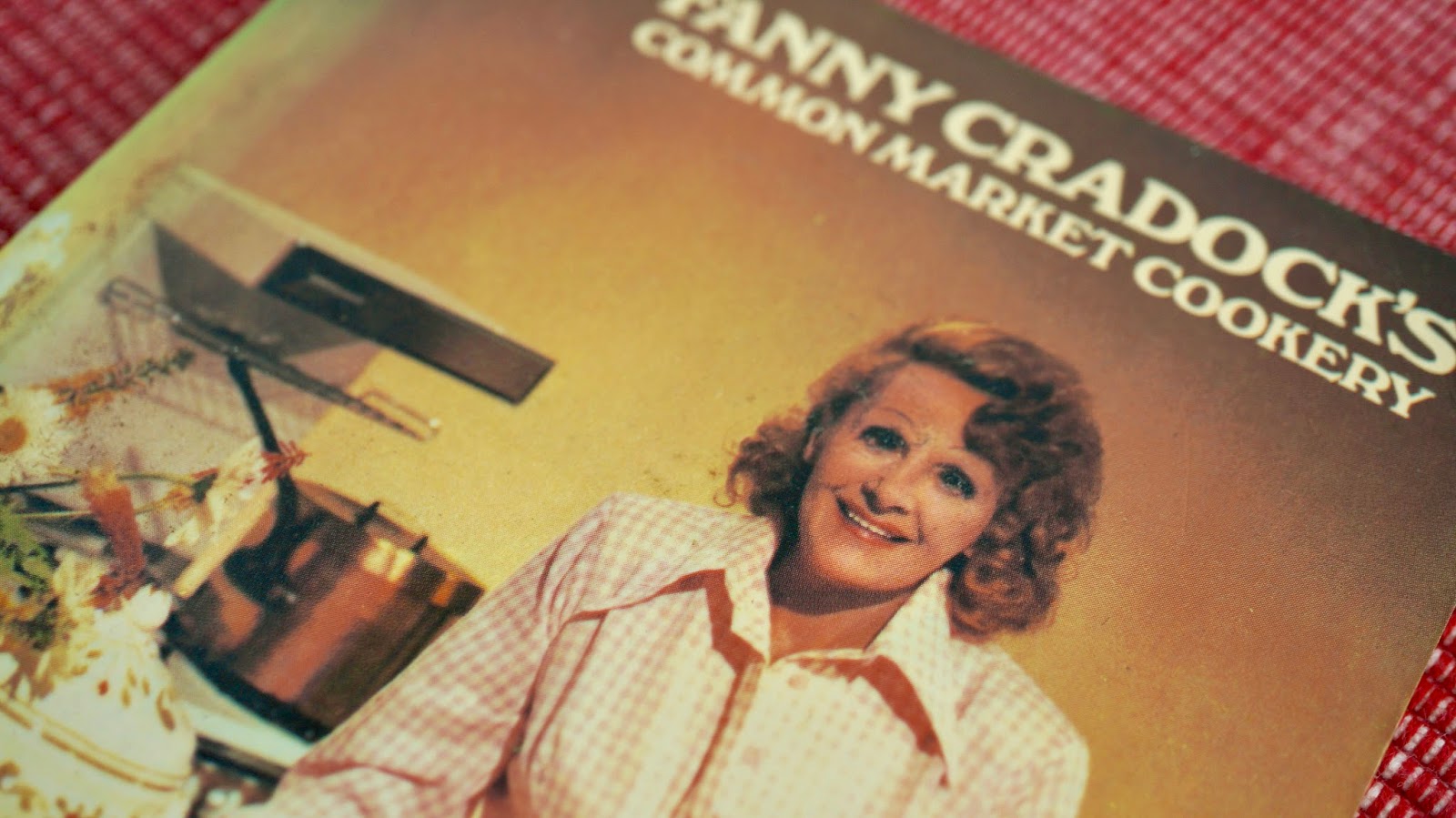
But what should I eat while I am there? Fanny has this covered too, as you might expect, with her 1973 Common Market Cookery book on the acknowledged centre of the Gastronomic World, France. Eating in France seems to be all swings and roundabouts. French folks spend one eighth of their incomes upon their bellies, Fanny proudly declares. Is it just me, or does that seem low? I should watch out for the service of vegetables. They will be served AFTER the main meal apparently, which may be tricky for me as a vegetarian. On the plus side the French seemingly have 480 different ways to cook a potato, which can't be bad. Can it? Only one way to find out. I will report back in equal measure on Tours itself, my tours of the lavatories, the Madames and as many of the potato variations as I can muster... Will you join me?
I've no idea what they'll all make of her, or me for that matter, but I'm looking forward to it greatly. As ever, Fanny is on hand to chaperone me throughout my stay. Back in 1959 she published a guidebook to help other ordinary people to Wine and Dine in France. Well, it might be rude not to do just that. The book is crammed full of her personal suggestions on how to find the very best meals that France, the country supreme in fine eating and drinking, can provide. It couldn't possibly be comprehensive, Fanny does not pretend to list ALL France's eating places, but she gives it a good go with 450 of her 'very favourites'. She insists that we do not pay any attention whatsoever to
Each recommendation is chosen to give me a 'high and assured level of delight at the table'. This may cause some raised French eyebrows as a solo diner. When Harry Met Fanny this is not. The book is not designed for mere commoners looking for adequate food at a low price. It is for those willing to pay a higher price for fine cuisine. This may be an expensive trip. The conference is in Tours, a place I have never been to before. I wonder if Fanny's recommendations will still hold true? Before I explore though, she continues to warn against complaining and fussing about the lavatories. I haven't been, but perhaps I will. I'm nervous now. I simply should 'use the pedals' without complaint, as some of France's most primitive establishments provide some of France's most memorable meals. Eeek.
Her first port of call en Tours is the Brasserie Bordeaux, which is apparently brightly decorated and run by a Madame and her daughter, who do above average treatments with vegetables. My eyes are watering already. Perhaps I'd be safer at Hotel Métropole, which has a rather plain restaurant but an exceptional Gâteau Maison. Or maybe La Rôtisserie Tourangelle is more me. It's knitted into the ancient streets as naturally as Madame Defarge knitted names into the steps of La Guillotine. It has frilly curtains and lavish portions, setting a pattern of provincial chic. Fanny knows me so well.
But what should I eat while I am there? Fanny has this covered too, as you might expect, with her 1973 Common Market Cookery book on the acknowledged centre of the Gastronomic World, France. Eating in France seems to be all swings and roundabouts. French folks spend one eighth of their incomes upon their bellies, Fanny proudly declares. Is it just me, or does that seem low? I should watch out for the service of vegetables. They will be served AFTER the main meal apparently, which may be tricky for me as a vegetarian. On the plus side the French seemingly have 480 different ways to cook a potato, which can't be bad. Can it? Only one way to find out. I will report back in equal measure on Tours itself, my tours of the lavatories, the Madames and as many of the potato variations as I can muster... Will you join me?
Thursday, 15 September 2016
Fanny Italia #1 - Bon Voyage!
I'm heading away for a few days next week to a place I've never, ever been before. Italy. There is no real reason why I've never been, I just haven't. People are always telling me that I would love it, it's all about food and wine after all. Even Fanny raves on about it all the time, but it still doesn't change anything. I've never been. Like most of us I am sure, the list of places I want to explore is ever expanding, and Italy just hasn't risen to the top of that list. Until now. It's all come around more quickly than expected. Am I prepared though?
So prolific was Fanny's writing that she has the perfect guide for any question that I may ponder in life. In 1950, she wrote a charming book called 'Bon Voyage' under the name Frances Dale, telling us, erm, I mean guiding us, how to enjoy our holidays in Europe by car. Surely this will be the only guide I need to get me ready. Fanny has a warning though. "A good deal of careful planning and a good deal of experience are required if the intended holiday-maker is to have both fun and freedom from worry." I wasn't especially before, but I am worried now.
I'm really not sure that I have enough time to absorb all the information that Fanny says I will require for my first trip. Fanny says I should have started to prepare for this trip as I travelled home from last years one. How will I ever catch up? I supposedly should have been ordering various maps throughout the year, and at various times laid them out on the drawing-room carpet floor, for my family to crawl over while I take after dinner coffee on my stomach. I'm only at the very beginning and already I haven't got the foggiest what Fanny is talking about. Besides, I don't have a drawing-room, or a carpet for that matter. Am I doomed?
I must make sure my car is in tip-top shape, because as Fanny reminds me, we 'as an island race' are not generally fluent on other languages. Fanny points out the obvious. "This disadvantage handicaps us from the start." She is right though, I realise, I can not speak a word of Italian. Nothing. I only have a few days to learn Italian. And car mechanics. Oh, and map reading too. It's overwhelming. Not to mention what I need to pack and how much money I need to take, all of which have chapters devoted to explaining Fanny's way. I've never felt so stressed out about a trip before in my life.
Reading through Fanny's guide, however, I soon realise with some relief that she has taken all the worry out of the trip for me, and has thought of everything. Even when it comes to which underwear I should pack, which is down to my own personal choice, if you are wondering. She's planned what I will do, where I will go, what I should eat, what not to drink, where to shop and what I should say to practically anyone I should meet. With all this worrying I have only just realised that I am flying, not driving. I can't even drive. So all I need to do is relax and enjoy my first experience of Italy, right? Well according to Fanny I should already of course be planning where to go next. Let's just see how I get on with this trip first - will you join me on a series of special blogs as I explore Italy with, and without, Fanny's guidance? Do you have any words of wisdom for me, to add to Fanny's expertise?
So prolific was Fanny's writing that she has the perfect guide for any question that I may ponder in life. In 1950, she wrote a charming book called 'Bon Voyage' under the name Frances Dale, telling us, erm, I mean guiding us, how to enjoy our holidays in Europe by car. Surely this will be the only guide I need to get me ready. Fanny has a warning though. "A good deal of careful planning and a good deal of experience are required if the intended holiday-maker is to have both fun and freedom from worry." I wasn't especially before, but I am worried now.
I'm really not sure that I have enough time to absorb all the information that Fanny says I will require for my first trip. Fanny says I should have started to prepare for this trip as I travelled home from last years one. How will I ever catch up? I supposedly should have been ordering various maps throughout the year, and at various times laid them out on the drawing-room carpet floor, for my family to crawl over while I take after dinner coffee on my stomach. I'm only at the very beginning and already I haven't got the foggiest what Fanny is talking about. Besides, I don't have a drawing-room, or a carpet for that matter. Am I doomed?
I must make sure my car is in tip-top shape, because as Fanny reminds me, we 'as an island race' are not generally fluent on other languages. Fanny points out the obvious. "This disadvantage handicaps us from the start." She is right though, I realise, I can not speak a word of Italian. Nothing. I only have a few days to learn Italian. And car mechanics. Oh, and map reading too. It's overwhelming. Not to mention what I need to pack and how much money I need to take, all of which have chapters devoted to explaining Fanny's way. I've never felt so stressed out about a trip before in my life.
Reading through Fanny's guide, however, I soon realise with some relief that she has taken all the worry out of the trip for me, and has thought of everything. Even when it comes to which underwear I should pack, which is down to my own personal choice, if you are wondering. She's planned what I will do, where I will go, what I should eat, what not to drink, where to shop and what I should say to practically anyone I should meet. With all this worrying I have only just realised that I am flying, not driving. I can't even drive. So all I need to do is relax and enjoy my first experience of Italy, right? Well according to Fanny I should already of course be planning where to go next. Let's just see how I get on with this trip first - will you join me on a series of special blogs as I explore Italy with, and without, Fanny's guidance? Do you have any words of wisdom for me, to add to Fanny's expertise?
Monday, 8 February 2016
Down and Out in London
When she wasn't encouraging us to squirt copious amounts of food colouring into every dish we were creating, Fanny Cradock was keen that we spent our time travelling around, soaking up as much culture as we could, and of course eating copious amounts of perfectly normally coloured food. Fanny wished of course that we did it in a very particular style - hers. I'm about to head off to London for a well deserved jaunt, and wondered how well her guide book of 1953 would hold up and help me to plan a suitably colourful trip?
Fanny says her 'unique' book will ensure that I have a happy and satisfying visit to the capital city, which is just what I am after. The book serves up, apparently, history as a 'fruity background' to the main mission of aiding me to lunch and dine in London's many fine restaurants. Naturally Fanny and Johnnie are the only people suitably qualified to help me on this quest, combining their 'gastronomic knowledge, literary skill and insight' (not to mention modesty) into the average person's problems of what dishes and wines to order. The average person. That's me.
Bon Viveur in London, compiled from various Daily Telegraph columns and articles from Fanny and Johnnie promises to give me the names of many restaurants, the prices of their dishes, detailed reports of the house specialities and even recipes which used at 'some' restaurants which I can introduce at home. So with a clarion call of 'Je ferai de mon possible' we are to be convinced that Fanny will indeed do her very best for us... Within limits. London of 1950 had changed beyond recognition from it's heyday of the late Victorian-Edwardian era as a 'gastronomes paradise'. Fanny notes that as a result of the two wars, much of the promised colour and fruity charm has been shed.
In 1953, Fanny is stepping into a restaurant on our behalf and seeing it with quite different eyes from the times when she allegedly went for 'private and personal enjoyment'. Now it's all about us, the average people. Fanny notes her task is akin to the painting of the Forth Bridge - endless - in that chefs move about, restaurateurs change and management switch. Reading through the guide there are so many altered places that I wish I could visit - the 'luxury class' of the Five Hundred Club in Albemarle Street, or perhaps an open sandwich lunch in the Débutantes Bar in the Brief Encounter on Brompton Road. Oh I forgot, I'm average, not high class.
I'll be staying on the South Bank. Fanny doesn't have recommendations for 'South'. Fanny recommends I eat at Whistlers Room Restaurant in the Tate Britain Gallery on Millbank. It's just across the river. Guess what, it's still there! I wonder if the unpretentious Mrs Adams is still feeding the hungry on 'good plain foodstuffs' - this is not a place for indulgent gastronomes - but Fanny recommends the soup. Will it still be hot and genuinely palatable? Will Kitty the star waitress still be adding a touch of extra character to the place with her watchful service? Will Chef Jasper still make his usual tour of the tables to enquire if all is well? Even for me, an everyday, average, lacking in colour person? Let's find out...
Fanny says her 'unique' book will ensure that I have a happy and satisfying visit to the capital city, which is just what I am after. The book serves up, apparently, history as a 'fruity background' to the main mission of aiding me to lunch and dine in London's many fine restaurants. Naturally Fanny and Johnnie are the only people suitably qualified to help me on this quest, combining their 'gastronomic knowledge, literary skill and insight' (not to mention modesty) into the average person's problems of what dishes and wines to order. The average person. That's me.
Bon Viveur in London, compiled from various Daily Telegraph columns and articles from Fanny and Johnnie promises to give me the names of many restaurants, the prices of their dishes, detailed reports of the house specialities and even recipes which used at 'some' restaurants which I can introduce at home. So with a clarion call of 'Je ferai de mon possible' we are to be convinced that Fanny will indeed do her very best for us... Within limits. London of 1950 had changed beyond recognition from it's heyday of the late Victorian-Edwardian era as a 'gastronomes paradise'. Fanny notes that as a result of the two wars, much of the promised colour and fruity charm has been shed.
In 1953, Fanny is stepping into a restaurant on our behalf and seeing it with quite different eyes from the times when she allegedly went for 'private and personal enjoyment'. Now it's all about us, the average people. Fanny notes her task is akin to the painting of the Forth Bridge - endless - in that chefs move about, restaurateurs change and management switch. Reading through the guide there are so many altered places that I wish I could visit - the 'luxury class' of the Five Hundred Club in Albemarle Street, or perhaps an open sandwich lunch in the Débutantes Bar in the Brief Encounter on Brompton Road. Oh I forgot, I'm average, not high class.
I'll be staying on the South Bank. Fanny doesn't have recommendations for 'South'. Fanny recommends I eat at Whistlers Room Restaurant in the Tate Britain Gallery on Millbank. It's just across the river. Guess what, it's still there! I wonder if the unpretentious Mrs Adams is still feeding the hungry on 'good plain foodstuffs' - this is not a place for indulgent gastronomes - but Fanny recommends the soup. Will it still be hot and genuinely palatable? Will Kitty the star waitress still be adding a touch of extra character to the place with her watchful service? Will Chef Jasper still make his usual tour of the tables to enquire if all is well? Even for me, an everyday, average, lacking in colour person? Let's find out...
Thursday, 2 July 2015
Fannys Firenze Frenzy
Fanny was a very well respected (at least that's what she said) travel correspondent before she transformed herself into a cookery writer and TV Chef. She'd scribble about anything if she got paid in reality, but she loved gadding about, dashing off columns and banging out books mainly about aspirational but perhaps achievable European travel from 1950's onwards. With Johnnie by her side, she selfishly packed up her trunk and toured round for the Bon Viveur Guide to Holidays in Europe. It was the TripAdvisor of its time. She invented it - they were the original Judith Chalmers and Michael Palin. Fanny just loved to get away, especially to Italy and in particular to Florence.
Notwithstanding, Fanny warned that Florence, despite it's 'gay friendliness', explosion of floral displays and people who were 'incredibly interested in your well-being' (did she mean overly nosey?), had 'climatic conditions' which produced heat that even the Romans considered intense. Well-to-do Italians flocked there for the winter. The travel guide, like many today, gives average temperatures year round, but Fanny introduces a new comparison to give her untravelled readers an idea of what these temperatures would be like. She compares and contrasts the average temperature in Eastbourne. So in July while it would be an imaginable 60F on Englands' coastline, in Florence it would be tropical at 81F. Strange how the Eastbourne Scale didn't catch on...
If you can bear the heat, Fanny recommends lots to do while in Florence. The most important of which is to shop for straw goods in the aptly named Straw Market. She couldn't get enough straw. In addition to shopping Fanny recounts the delights of the Firenze Golf Club, the Winter Opera Season (December and January), a wealth of Art and Architecture and in summertime you can watch the locals play football in funny costumes. What more could you want from a forgiven jaunt? It all sounds so perfectly civilised.
Except the food, which Fanny describes as 'running the gamut from A to B' using the adjective 'limited' as a harsh warning. She then, of course, goes on to list a huge variety of food that you can get, and better still that you should bring home with you. Exotic items like Aubergines and her beloved Pimentos. She lets readers and possible travellers know to expect an excessive use of cheese, far too much frying, out of proportion tomato sauces, inordinate amounts of pastas and for everything to be served with an abundance of oil, which Fanny notes is disastrous for the 'untrained stomachs.' Don't ask how she knows, but Johnnie looks sheepish.
Fanny does recommend Florence for sweet little biscuits however, and recreates her version of a Florentine in the partwork. She melts butter with sugar, adding in chopped almonds, flaked almonds, chopped glacé cherries (Il Tricolore if you please) and a little cream. Fanny leaves this mixture to cool before blobbing teaspoons-full onto trays and baking them for 12 minutes. They spread a lot (did she miss out the flour?), and emerge like super thin shards of brown glass, ready for their characteristic chocolate bases, swirled with forks into wavy patterns. They sum up Fannys review of Florence - gay and colourful, baked in heat unknown in Eastbourne, cultured and exotic, crisp and sweet, although a little greasy with copious amounts of butter. Presumably by the time you return from Florence your stomach has been trained to cope.
Notwithstanding, Fanny warned that Florence, despite it's 'gay friendliness', explosion of floral displays and people who were 'incredibly interested in your well-being' (did she mean overly nosey?), had 'climatic conditions' which produced heat that even the Romans considered intense. Well-to-do Italians flocked there for the winter. The travel guide, like many today, gives average temperatures year round, but Fanny introduces a new comparison to give her untravelled readers an idea of what these temperatures would be like. She compares and contrasts the average temperature in Eastbourne. So in July while it would be an imaginable 60F on Englands' coastline, in Florence it would be tropical at 81F. Strange how the Eastbourne Scale didn't catch on...
If you can bear the heat, Fanny recommends lots to do while in Florence. The most important of which is to shop for straw goods in the aptly named Straw Market. She couldn't get enough straw. In addition to shopping Fanny recounts the delights of the Firenze Golf Club, the Winter Opera Season (December and January), a wealth of Art and Architecture and in summertime you can watch the locals play football in funny costumes. What more could you want from a forgiven jaunt? It all sounds so perfectly civilised.
Except the food, which Fanny describes as 'running the gamut from A to B' using the adjective 'limited' as a harsh warning. She then, of course, goes on to list a huge variety of food that you can get, and better still that you should bring home with you. Exotic items like Aubergines and her beloved Pimentos. She lets readers and possible travellers know to expect an excessive use of cheese, far too much frying, out of proportion tomato sauces, inordinate amounts of pastas and for everything to be served with an abundance of oil, which Fanny notes is disastrous for the 'untrained stomachs.' Don't ask how she knows, but Johnnie looks sheepish.
Fanny does recommend Florence for sweet little biscuits however, and recreates her version of a Florentine in the partwork. She melts butter with sugar, adding in chopped almonds, flaked almonds, chopped glacé cherries (Il Tricolore if you please) and a little cream. Fanny leaves this mixture to cool before blobbing teaspoons-full onto trays and baking them for 12 minutes. They spread a lot (did she miss out the flour?), and emerge like super thin shards of brown glass, ready for their characteristic chocolate bases, swirled with forks into wavy patterns. They sum up Fannys review of Florence - gay and colourful, baked in heat unknown in Eastbourne, cultured and exotic, crisp and sweet, although a little greasy with copious amounts of butter. Presumably by the time you return from Florence your stomach has been trained to cope.
Subscribe to:
Posts (Atom)