Showing posts with label Johnnie Cradock. Show all posts

Friday, 11 August 2017

Haysi Fantasy - Johnnie's Pain Is Big Leggy

It seems I have something very particular in common with Fanny Cradock's husband, Johnnie. It's not that I am browbeaten at home, or in the kitchen. It's not that I quiver whenever my partner barks an order at me. It's not that I am shy, retiring or in any way intimidated or fearful of daring to contradict anyone where I feel it necessary. Even Fanny. It's not even that I am partial to a monocle, cravat and a sturdy glass of port to see me through the evening. No, it's something that others find strange, often won't believe at all and quite simply cannot comprehend. I, and Johnnie, hate Rice Pudding.

Fanny Cradock Grand Rice Pudding

For me, I still wince at the thought of the un-tearable, thick, black, leathery, tarpaulin skin that was always atop the Rice Puddings that emerged from the oven at home. I. Couldn't. Bear. To. Look. Never mind eat it. I once sat all night at the kitchen table when my Dad said I 'couldn't leave' until I'd eaten it. I won. Everyone I have ever met in life since (almost) thinks I am missing out. I always felt I was alone. There didn't appear to be a suitable support group for me to join. I just had to remain silent and get on with life. Until now. Johnnie is my saviour.
Fanny Cradock Grand Rice Pudding

Fanny's version of Rice Pudding, is, as expected, slightly different to all others. It's an Olde English recipe which she, naturally, found in France labelled subtly as Une Recette Familiale Anglaise. It does not looks like a Rice Pudding. Good. It does not taste like a Rice Pudding. Smashing. It is made with all the same ingredients as a Rice Pudding. Oh. The key is, it is made in a totally different way. No oven. No Black tent-of-death. No sitting at the table all night. Maybe.

Fanny Cradock Grand Rice Pudding

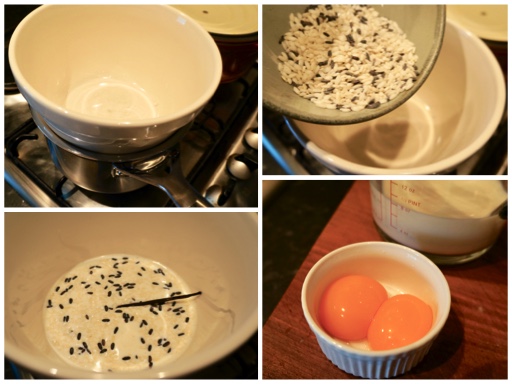
Fanny makes her Rice Pudding in a double-boiler on the stove-top. She uses Patna pudding rice, which I don't have. The only Rice I can find in my cupboard is Risotto. Which happens to have some Wild Black Rice mixed through it. Feel the Fear. Fanny adds milk, in stages, and a vanilla pod, while it heats. Stirring occasionally, cooking slowly, it seems just like a Risotto to me. Which is soothing. And it turns out that Black Rice is really Red Rice, and turns the whole mixture pink. Added bonus. Once all the milk is absorbed, Fanny adds in two egg yolks one at time, and continues to heat and beat gently before flinging in a little sugar, to taste, and some stiffly whipped cream.

Fanny Cradock Grand Rice Pudding

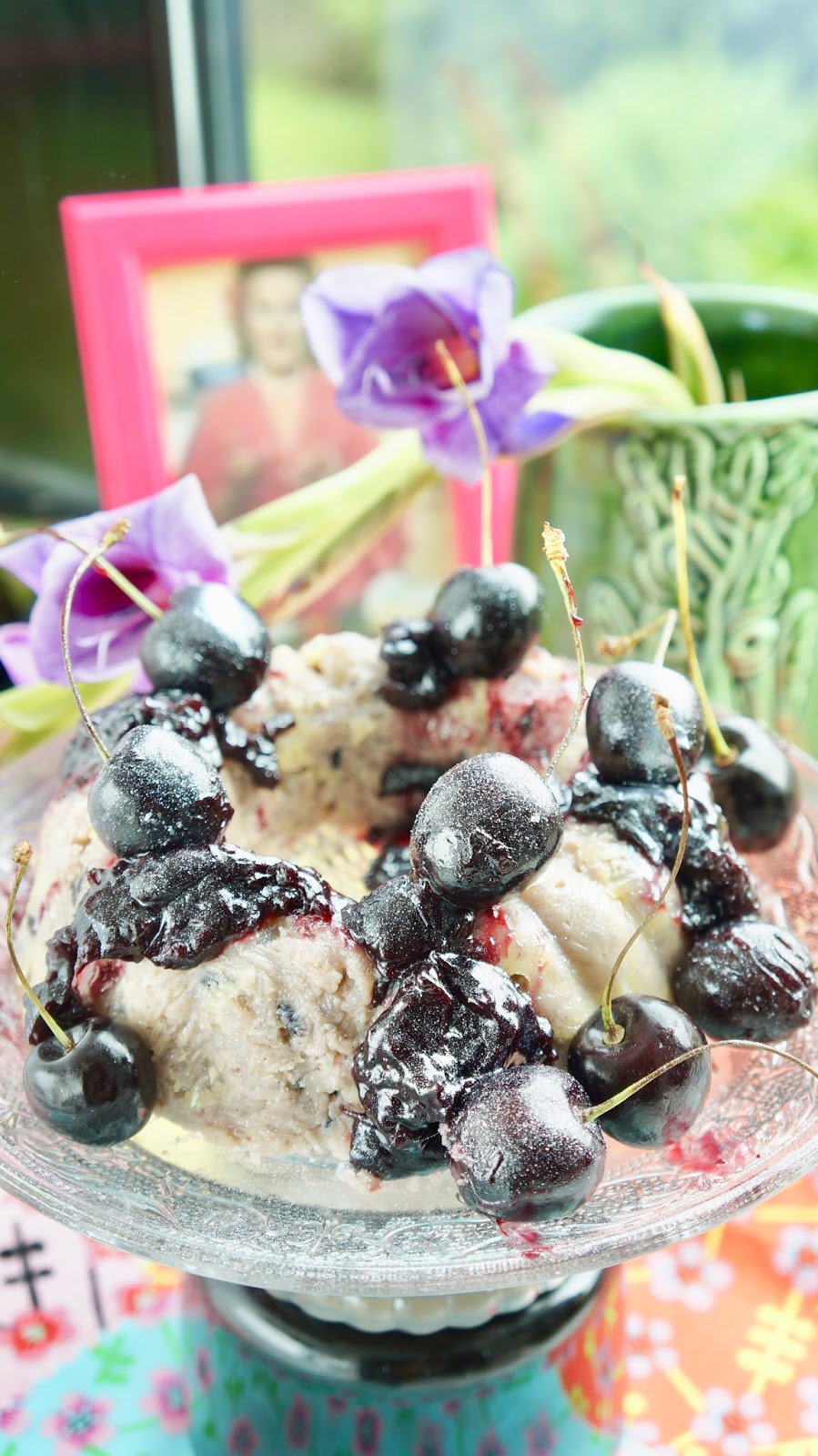
To tempt Johnnie (and me) even further, Fanny moulds the Rice Pudding and leaves it to cool in the fridge. It's hard to resist a bit of moulding. Fanny disguises it primarily to replace Johnnie's terrible memories. Decorated with seasonal fruit, I have cherries. Seemingly, when she visited him once during World War Two in the Royal Masonic Hospital where he was recovering from tonsillitis (which, Fanny notes is very serious in a grown man) she discovered Johnnie out of his bed, in his pyjamas (thankfully) pushing something down the wash basin that he didn't want the Matron to see. It was English Rice Pudding. Not Fanny's 'fantastic' French Rice Pudding, which he would never say no to. He would never say 'no' to Fanny full stop. Would you?
Fanny Cradock Grand Rice Pudding

Monday, 26 September 2016

Fanny Italia #4 - Wine for today, hopefully

Fanny Cradock may have felt that Italian food ran the 'gamut of A to B' but surely when it comes to wine, which was always Johnnies domain, more can be said. I'm hopeful that my very first trip to Italy, staying in Turin and touring round the Piedmont region, will be a boozy affair. With some trepidation I open the volumes that Fanny and Johnnie have written together on wine in search of a flicker of good news to keep me bouyant ahead of departure. It seems promising - their original wine book from 1954 includes and additional letter of the alphabet - all the way to C... And maybe by the time Johnnie wrote his 'Wine for Today' in 1975 things will have moved on considerably?

Fanny Cradock FannyItalia Wine

In 1954 the aim was to inform the who knew little or nothing who had a desire to know more. Their purpose was to encourage, stimulate and maybe assist newcomers to gastronomy to consider wine, taste wine and study wine for themselves. That's exactly what I want to do in Italy. Perhaps they can help me after all? Fanny and Johnnie steer me through food choices (none are Italian), how to cook with wine (Vermouth is perfectly happy in the kitchen), ordering wine in restaurants (most wine waiters are ignoramuses, so you must guide them), drinking wine at home (apparently no excuses are necessary), hosting a wine tasting party (choose four for a modest affair) as well as a summary of wines by region. Well, French at any rate. If we must consider Italian wines, start by considering Asti Spumanti, a frivolous drink. Fanny says only one word is required. Don't.

Fanny Cradock FannyItalia Wine

The Bon Viveurs do admit that Italy does have at least one good wine. A red. Barolo. It has a certain amount of bouquet which is lacking in nearly all the others. The faint praise continues, with a faintly positive description of it having a faint resemblance to Burgundy. Perhaps the wine sessions and visits to vineyards that I have booked up will provide a faint whiff of pleasure while I am there?

Fanny Cradock FannyItalia Wine

There is a glimmer of hope. In the 1970s, Johnnie, presumably free from the shackles of Fanny's French obsession, does say that the quality of Italian wine has greatly improved. Finalmente! Italy, being one of the oldest, and biggest, wine producers in the world, finally gained the support of their government to establish the Denominazione di Origine Controllata, or D.O.C. based of course on the French system, which has helped immensely. Johnnies advice is to always buy D.O.C approved wines. Good news. The good news continues as he says that Italy does not often export it's best wines, only those of medium quality.

Fanny Cradock FannyItalia Wine

Johnnie is especially drawn to Piedmont, where he describes Barolo as the 'king of wines' or the 'wine of kings'. Either will do nicely for me. Protected by law, it is aged for at least three years in oak barrels, turning orange red in colour and still remaining dry. Johnnie says Barbaresco is similar but matures faster. He recommends I also watch out for Sizzano, Lessona, Gattinara, Fara, Ghemme, Boca and Mottalciata, all of which need time to mature. I am hopeful they will have matured sufficiently by the time I arrive. And then there is Carema, Barbera d'Asti (which is very good drinking), a dry red called Freisa, Dolcetto, Grignolino, Cortese and Erbaluce di Caluso. There is even a sparkling red which carries the scent of roses called Brachetto. I'll be simply spoiled for choice. And that's before the Vermouth is opened. There will be no need to reach for the Asti Spumante.

Fanny Cradock FannyItalia Wine

Monday, 2 May 2016

Fanny Features - Do Ya Think I'm Sexy?

Back in July 1970, when there were only a couple of TV channels to choose from, a new series from the nations favourite, Fanny Cradock, always sure to be riding high in the ratings, was quite the big news. Fanny herself was quite the big celebrity, featuring somewhat strangely to todays eyes as the inspirational and aspirational poster-girl in flashy magazine spreads with her must-have celebrity life. So naturally she'd give quite the big interview to promote the new batch of shows. Sadly knocked off the cover of the Radio Times by the young whipper snapper Lulu, Fannys big scoop for her new series was how the journalist described her to the readers.

Fanny Cradock Radio Times

Sexy. Very powerful and very sexy, unbelievably those were the opening words. The good folks of 18th-24th July 1970 were mostly settling down to watch the excitement of Commonwealth Games beamed live from Edinburgh, so Fanny was pitched as the steamy, spicy and risqué alternative. They must've choked on their digestive biscuits reading this. Nestled after a far-from suggestive Party Political Broadcast by the Labour Party and between what I'm sure was a provocative but not-so titillating Mantovani Concert and the ever-sensuous Kirk Douglas in Cortez and the Legend, the BBC hid flirtatious Fanny and her new show away on BBC2 at 10pm. Presumably well after the watershed, and just before bed when viewers only had Ovaltine on their minds, was the only safe time to broadcast such an explosive sex-bomb to the nation.

Fanny Cradock Radio Times

The Radio Times writer does concede that her sexually alluring qualities don't always come across well on the box, especially with her hand-washing being reminiscent of Lady Macbeth. I should hope not, this was the BBC, and it was an educational cookery programme, essential for the housewives after all. The BBC, the nations favourite Auntie, wouldn't want the bumbling husbands attention to be artificially aroused by accidentally tuning in just for a glimpse of pure Fanny-shaped filth now would they? Anyway, the article makes it very clear Fanny only has come-hither eyes for one man, dear old Johnnie. Without him, she says, nothing would be worth a damn.

Fanny Cradock Radio Times

The article reminds us of Fannys professional abilities too, it's not all seductive, suggestive shenanigans. The old-favourites are trotted out - her rags to riches life-story, playing to screaming hordes at the Royal Albert Hall, Fanny being such a great cook and having several careers. All interspersed with scenes of idyllic, but fantasised, mother-hood and Granny-dom not only with her own beloved family, but in her adopted assistants who were always eagerly on site, fastidiously training to follow in her footsteps. The writer notes that the assistants are highly-selected from a pool of over 1500 applicants, with Peter the star-pupil, suggesting they may have been 'summoned to sit at Madame's feet'. Fanny snorts and 'with a look that would stop a bolting horse' replied, 'they'd be trampled to death, dear'. Such is her raw magnetism, clearly.

Fanny Cradock Radio Times

The new series has a suitably suggestive title for such an absolutely sexy lady - 'Fanny Cradock Invites...' Into her fabulous and well equipped home kitchen she means. That's where the provocation falters. Fanny is keen to show viewers around, but not her private quarters, just her sensational kitchen space, with cookers of every type in every space imaginable, poised for the assistants to begin. Fanny herself lays out a seductive spread in her garden before we leave, with a dish which surely says 'pure sex' like no other. It gets Johnnie fired up every time. Cold Green Omelette. Johnnie is standing by to keep the legions of lusty, libidinous men at bay as Fanny casually but passionately twirls her sunglasses and smiles a knowing smile. Like all true sex-maidens... 'You may want me, but you shall never have me'. At least we get the omelette.

Fanny Cradock Radio Times

Tuesday, 19 April 2016

Ice To See You, To See You Ice

Fanny has a delicious proposal for me. She is suggesting we go on an adventure together. I'm assuming it's just me and her, she doesn't mention poor Johnnie at all. I'm also assuming there is nothing deliciously underhand going at all, just to be clear. I'm assuming it's something deliciously food related, she's obsessed. I'm hopeful. She's raising her eyebrows to even higher levels than usual and is making mysterious motions towards the kitchen, so, despite a slight feeling of panic, I can only speculate we aren't going very far on this delicious adventure together.

Fanny Cradock Orange Ice Cream

Thankfully, the adventure Fanny has in mind is into the 'realms of home-made ice-cream', so all we need to locate is our freezer. For those less fortunate than Fanny perhaps, who only have a small freezing compartment in their ordinary domestic refrigerators, Fanny says join us anyway, but just cut down her quantities to fit. So just miniscule tablespoons perhaps? For those more fortunate in the freezer department, Fanny promises we can make ice creams in bulk for storage, adding flavours as required. I always find ice cream is best eaten immediately until it's all finished, so storage is a new concept for me...

Fanny Cradock Orange Ice Cream

Fanny has a set of 'basics' that she's keen that we cherish and learn by heart so that they are in our heads and at our disposal whenever we want to make ice cream, throughout the year, before we progress. She knows how to plan an adventure, eh? Her foundation recipe is 1 pint of confectioners custard and either 1/2 pint (when you are willing to pay for more) or a 1/4 pint (if your purse is stretched) of whipped double cream. Indeed if your purse is very stretched, Fanny says you can frankly freeze the flavoured custard on it's own. She does however note that it's flat-out not worthy of the first-class, first-rate standards that we've come to expect from her. So the message is you can, but the real message is don't.

Fanny Cradock Orange Ice Cream

Fanny's method for most freezers is mainly to whip the cold cream until it just hangs from the whisk, and then whip it into the custard. freeze it until the edges are set and the centre is squidgy, whip it again for 5 minutes, then return it to the freezer until it's solid. When frozen, take it out and whip it again and refreeze. If you have a deep freeze, just bung it in and freeze it. So is all committed to memory? I will pass round examination papers shortly.

Fanny Cradock Orange Ice Cream

Well, forget it for now, as Fanny has a recipe of her very own to teach us. It's for Orange Ice Cream. In fairness, it's a similar process, but swapping the custard for a sorbet, mostly. Fanny dissolves sugar slowly in water, with orange zest, then boils it for nine minutes until it's a very fine syrup. She adds an egg yolk and strained orange juice, cooks for five more minutes stirring all the time. Then freeze, whip, freeze, whip and refreeze as before. Whip in whipped cream and freeze for the final time. There you have it, orange ice-cream. Serve in an orange, of course. It's delicious adventure. It soon becomes clear why Johnnie was not invited. Fanny reveals that, despite him being a wine-lover, he has been known to polish off forty-seven portions of this particular ice-cream in one session. Fanny says he is a pig about it, but being Fanny's own recipe of course he is a very discerning pig. Just don't let him near your freezer compartment.

Fanny Cradock Orange Ice Cream

Monday, 8 February 2016

Down and Out in London

When she wasn't encouraging us to squirt copious amounts of food colouring into every dish we were creating, Fanny Cradock was keen that we spent our time travelling around, soaking up as much culture as we could, and of course eating copious amounts of perfectly normally coloured food. Fanny wished of course that we did it in a very particular style - hers. I'm about to head off to London for a well deserved jaunt, and wondered how well her guide book of 1953 would hold up and help me to plan a suitably colourful trip?

Fanny Cradock in London

Fanny says her 'unique' book will ensure that I have a happy and satisfying visit to the capital city, which is just what I am after. The book serves up, apparently, history as a 'fruity background' to the main mission of aiding me to lunch and dine in London's many fine restaurants. Naturally Fanny and Johnnie are the only people suitably qualified to help me on this quest, combining their 'gastronomic knowledge, literary skill and insight' (not to mention modesty) into the average person's problems of what dishes and wines to order. The average person. That's me.

Fanny Cradock in London

Bon Viveur in London, compiled from various Daily Telegraph columns and articles from Fanny and Johnnie promises to give me the names of many restaurants, the prices of their dishes, detailed reports of the house specialities and even recipes which used at 'some' restaurants which I can introduce at home. So with a clarion call of 'Je ferai de mon possible' we are to be convinced that Fanny will indeed do her very best for us... Within limits. London of 1950 had changed beyond recognition from it's heyday of the late Victorian-Edwardian era as a 'gastronomes paradise'. Fanny notes that as a result of the two wars, much of the promised colour and fruity charm has been shed.

Fanny Cradock in London

In 1953, Fanny is stepping into a restaurant on our behalf and seeing it with quite different eyes from the times when she allegedly went for 'private and personal enjoyment'. Now it's all about us, the average people. Fanny notes her task is akin to the painting of the Forth Bridge - endless - in that chefs move about, restaurateurs change and management switch. Reading through the guide there are so many altered places that I wish I could visit - the 'luxury class' of the Five Hundred Club in Albemarle Street, or perhaps an open sandwich lunch in the Débutantes Bar in the Brief Encounter on Brompton Road. Oh I forgot, I'm average, not high class.

Fanny Cradock in London

I'll be staying on the South Bank. Fanny doesn't have recommendations for 'South'. Fanny recommends I eat at Whistlers Room Restaurant in the Tate Britain Gallery on Millbank. It's just across the river. Guess what, it's still there! I wonder if the unpretentious Mrs Adams is still feeding the hungry on 'good plain foodstuffs' - this is not a place for indulgent gastronomes - but Fanny recommends the soup. Will it still be hot and genuinely palatable? Will Kitty the star waitress still be adding a touch of extra character to the place with her watchful service? Will Chef Jasper still make his usual tour of the tables to enquire if all is well? Even for me, an everyday, average, lacking in colour person? Let's find out...

Fanny Cradock in London

Friday, 8 May 2015

A Pile of Crêpes

Johnnie should be worried. More worried than usual. He often looked somewhat concerned anyway, but somehow remained unflappable in Fanny's presence. Perhaps not today. There is something different in the air, a change of mood, a change of intention. Poor Johnnie. He's probably quietly taken himself off and is hoping to remain hidden downstairs in the dank and dark wine cellar. Maybe Fanny won't notice he is absent, or maybe she has devious plans... She's not in a rage, she's not cross and there is no suggestion she will be walloping anyone. Not today. Quite the opposite. She's felling, well, a little fruity to be honest.

Fanny Cradock Fruit Crêpes

Fruit Pancakes that is. And she is not in the mood for hanging around, this potent feeling may not last. She has her crêpes already prepared, layered, wrapped in ordinary kitchen foil and stacked in the refrigerator, so she's good to go. It's as if she has been planning this flush of lustiness. I made mine earlier too, following Fannys instructions but using her recipe which contained white wine. It's all part of Fannys seduction plan, fling in some booze wherever possible. The wine actually makes the crêpes very thin and flow around the pan with ease, making crêpes that look like tracing paper.

Fanny Cradock Fruit Crêpes

The first of Fannys fruity flairs are Crėpes Caramelisées aux Pommes, or Caramel Apple Pancakes. Fanny quickly peels and cores a cooking apple before slicing it into thin rings. These are laid over a single pre-prepared crêpe, sprinkled with sugar and popped under a hot grill until they bubble and brown. Fanny warns not to have it too close to the heat, much as there is hurry for seduction, as they will caramelise before the apple cooks, so she asks that you please remember! Fanny hasn't even noticed that Johnnie is missing, she's engrossed in her next temptation - oomphing up the fruitiness with a Tiered Orange creation, or Gâteau des Crêpes aux Oranges.

Fanny Cradock Fruit Crêpes

These are fairly similar to the Pommes, but are made with layers of pre-prepared crêpes sandwiched with home-made orange custard. Fanny frisks up egg yolks with flour and sugar until they are pale and foamy. Meanwhile she heats a mixture of orange juice and orange curaçao gently on the stove top. There is always room for more alcohol, poor Johnnie doesn't stand a chance. Just before the alco-juice boils, she pours it over the sweetly eggy mixture, stirs until its blended and pops it over a double boiler to thicken up, stirring constantly of course. It should coat the back of a spoon. The custard is spread between the crêpes and then topped with thick orange slices, sugar and grilled until brown. Now, where is Johnnie?

Fanny Cradock Fruit Crêpes

Fanny clearly is not convinced that these two alone are enough to woo Johnnie, so includes a third option. Stuffed Pancakes, or Crêpes Farcies. Soft fruits this time, radiant red raspberries and beaming, burnished blueberries made into a quick jam. With internal temperatures soaring, there's no time for it to set, so Fanny has a little trick. The fruits are heated in a pan, then a mix of white wine (I know!) and a little potato flour is added. It thickens in seconds! Fanny then rolls up some fruit with jam in her crêpes, and tops with more of the glazed, lusty preserve. Johnnie will surely not be able to resist. The whiff of the fruit and sugar would surely be enough to tempt him back upstairs, but I have no doubt that the waft of alcohol will certainly bait him back into Fanny's arms, unable to resist. Run, Johnnie, Run!

Fanny Cradock Fruit Crêpes

Monday, 13 April 2015

Johnnies Dash of Bitterness

Johnnie has a harsh warning that he may have to resort to violence. He wants to make this point very clear for us all before we move on. What's about to tip him over the edge? Is his rampage because Fanny relegates him to one measly feature in each partwork exploring wines of the world? Did Fanny provoke the attack by using the last of his favourite Marsala in her Zabaglione last night? Was he brutally offered a cheeky glass of sweetish, sparkling Asti Spumanti by an uneducated wine drinker? No, it was simply the thought of someone adding either ice, soda water or ginger ale to cognac that started the ruckus. Unless it was Italian Brandy. Johnnie thinks that Italian 'cognac', which obviously legally cannot be called 'cognac', is obviously only suitable for mixing with ice, soda water or ginger ale, which Johnnie says you would be sure to agree if you tasted it. All clear? Don't make him ferocious again.

Fanny Cradock Aperitifs

Johnnie calms down just long enough to tell us that he is a fan of the aperitif and dessert wines from Italy that others maybe aren't too sure about. Fanny may be adamant in insisting that Marsala and Sherry are only 'pudding wines', but Johnnie thinks she is wrong. Asti may be cheap and cheerful, or as he puts it 'sweet and jolly' and not at all suitable for serious wine drinkers, but it is popular. Johnnie especially embraces the bitterness though, and wants to accentuate the astringent advantages of the aperitif.

Fanny Cradock Aperitifs

I enjoy bitter tastes too, but I've never really thought too much about why or indeed why some people don't. Never until this past weekend that is. The Edinburgh Science Festival is in town, with a very welcome menu of GastroFest events to tempt geeks and gastronauts alike. As a slight caustic GastroGeek I was tempted by the Late Lab Molecular Mastery event held in the sinister dissection room of the former Royal (Dick) School of Veterinary Studies, now the much less sniggery but no less sharp Summerhall. The session was led by Max and Zoe from The Drink Factory in London, who set out to demonstrate how the art of cocktail making has become a science, showing some tricks of the trade to help experimenting at home. Phew, I can call it experimentation now.

Fanny Cradock Aperitifs

Johnnie would've been very pleased to note that they began by exploring bitterness, championing the sometimes harsh and sometimes tart tastes of his beloved Italian aperitifs, Campari and Martini, which he says are best served with soda water, ice and a slice of lemon. They really haven't changed in appearance at all through the years. Classics. As we were welcomed to the group experiment, we were encouraged to taste a ready mixed cocktail waiting at our tables for us. Max explained it was an Americano, not the coffee but a simple, sharp, sour mix of Campari, Martini Rosso and Soda Water. No lemon slice, but thank heavens for Max it wasn't Cognac. 'Go on, take a sip' we were told. You don't need to ask me twice, it's an 'experiment' after all. What did we think of the taste? Are we fans of bitter?

Fanny Cradock Aperitifs

I was one of the few hands that shot up, yes I am! Some liked it, but not much. Some hated it. Max and Zoe were ready to astound us with a scientific change to our cocktail, transforming the bitter drink to sweet. They had some pre-mixed solutions on the tables for us to add, but not what we thought. Well, not what I expected at any rate. Would we be adding sugar? Not at all, it was a 10% salt solution, and we added around 10ml to our glass, so just one 1g of salt. After a quick swirl, our Americano's now tasted sweet. Our bitter taste receptors had been blocked by the salt you see. We went on to complete further fascinating absinthal experiments involving distillation, maceration and louching. I learnt a lot, I will be conducting many more experiments at home. The lasting lesson of the day though is that dear old acidic Johnnie needn't be bitter any more. If Fanny is in danger of his murderous thoughts a quick sprinkle of salt is all that is required. Or a cocktail. Or better still, both.

Fanny Cradock Aperitifs

Monday, 6 April 2015

How to Jug a Bon Viveur

I'm not sure how Fanny Cradock would feel about sharing the page with others, even other food writers. Especially other food writers? Were there other food writers? After all, why would one need to read anyone else's words when her own guidance, knowledge and expertise was freely available to be absorbed and put into action in exactly the way she describes? Fanny, and Johnnie, wrote regular columns in The Telegraph under the moniker of Bon Viveur to reassure, and inadvertently perhaps, reprimand, housewives across the land with their words. They were not alone however. There were other food writers. Many of those also wrote for The Telegraph. Do you think Fanny knew that at the time?

Fanny Cradock Food Writing

I practically ran down to my local booksellers on publication day when a collection of food writings originally published in The Telegraph were recently collected together and republished in one volume. I couldn't wait to snap up a copy. How To Jug A Hare has been compiled and edited by Sarah Rainey, with a foreword by Bee Wilson. What a lovely job it must have been to dive into those archives and discover the delights of culinary craftsmanship to share again with us hungry foodies. And what a lovely job they have done!

Fanny Cradock Food Writing

Fanny features heavily throughout, naturally, which is a real treat for us all. A selection of sixteen sublime articles, scooped up from storage and presented again for us to chortle along with. Let's not forget though, it's not all Fanny, many other fantastic food writers from history are expertly laid side by side. Fanny sits comfortably, almost dizzyingly, beside Egon Ronay, Clement Freud, Elizabeth David, Elizabeth Craig, Claudia Roden, Robert Carrier, Hugh Fearnley-Whittingstall, Josceline Dimbleby and many others. All brilliant names from through the years, and all brilliant pieces of food writing to show off. Fanny arches proudly across them all, she even receives the ultimate accolade from the editor - a whole chapter dedicated to 'Cranky Cradock'.

Fanny Cradock Food Writing


Whether Fanny is telling readers how to plan for 'the years most indigestible meal' (Christmas Dinner), how to 'put a wronged casserole to rights' or sharing the delights of Aunt Meg's flower-pot loaves, she does it with her usual humour and forthrightness in equal measure. Food writing columns are uber-seasonal but the skill of the editor in this collection is to position writing from 1899 alongside selections from 1959 and the more modern day, arranged by season not chronology. As a reader you often have to turn back to the given date to check - some themes seem so very modern. I guess food fads come and go, but it's fascinating to read about fashionable issues that seem like trends in this way. It provides a very pleasing perspective.

Fanny Cradock Food Writing

Fannys final entry in this collection is her 'Pet Hates of 1971' (although later columns do appear earlier) which so easily could've been published today. Fanny is cross about the endless cellophane 'over-wrapping' which often results in her struggling and breaking her nails trying to gain access to various products. She's fuming that manufacturers are disguising less product in larger packets. She's raging at marketing speak misusing the English language with frightful phrases like 'Fresh Frozen'. 'Fresh is one thing, Frozen is another, both can be very good but like male and female, they cannot be the same', Fanny tells us. The whole collection is a magnificently enjoyable read, wisely combined and wonderfully compelling. Whether or not Fanny would have preferred the whole volume to be dedicated to her and her alone remains unknown. Fanny Cradock can so often be overlooked in culinary history as simply a figure of fun. She undoubtedly was, but for me to see her re-placed in history as one of the great food writers is as reassuring and reprimanding as she herself was back in the day.

Fanny Cradock Food Writing

Thursday, 12 March 2015

Wee Blind Mice

Fanny and Johnnie liked to think that they captured the imagination of everyone interested in cooking, even children. They appeared on Children's TV programmes as early as 1958 in a show called Lucky Dip. Apparently this led to 'record-breaking fan-mail' from their young audience and further slots on a show called Tuesday Rendezvous (which was also shown on Fridays, obviously) and even a series of cookbooks for children. The Cradocks love affair with children is brought into question with the books' titles though. Would you purchase a set of books for your wee dears called 'Happy Cooking Children'?


For Fanny, Children's Cookery had to have all the excitement and colour found in the great classical writings (we can presume she means her own here), but with added WHY's and HOW's for the young fans. She believed in 'safety first' to protect the smallest readers from any chance mishaps. Especially for garnish. Fanny recognised that young cooks loved to arrange and decorate, so she made sure that she provided stimulating ideas with 'only simple, inexpensive, edible trimmings' to be used by small chefs.


The weekly partwork always had something for the 'small fry' to try. They didn't often make a great deal of sense, but it was Fannys attempt to inspire. Who wouldn't be inspired by chocolate mice nibbling cheese? These little mischiefs are made from meringues, one of Fannys starter recipes, so perfect for wee ones. Once whisked up, they simply need to be shaped 'like mice' by doming them between two oiled dessertspoons and dried out in a low oven. Fanny's Top Tip - Try to make sure they are flat bottomed, broad in the behind and narrow to the nose. Easier said than done, for beginners. As she is keeping it simple for the children, she refrains from saying 'quenelle' but that's what she means.


With safety first in mind, Fanny suggests melting the chocolate to coat them by taking a packet of chocolate chips, plonking them in a bowl and whacking it on the bottom of the low oven until a wooden spoon can make them a bit squidgy. Then, beat them 'very hard' until they are smooth. Just as well to introduce the super keen young ones to Fannys favourite techniques at an early age. I opt for both milk and white chocolate chips, just to be fancy. The cooked meringues are them 'wiggled' in the chocolate and their 'overcoats' left to dry on greaseproof paper.


To complete the illusion of mice, small slivers of almond are added for ears, and I've added sugar balls for eyes. Fanny is always one for realism though - so mice must have tails. She suggests cutting small lengths of string, dipping them in the melted chocolate and attaching them. So bang goes the 'safety first' message. How many poor wee inspired souls choked on the string tails I wonder? Fanny justifies this veering from the rules by pointing out that Sugar Mice you buy in shops have string tails, so that's OK then. Authenticity. To delight the little ones' parents to the point of no return, the completed mice should be displayed a top a large chunk of big holed Emmental Cheese. Fanny warns us not to be fooled by our sneaky cheesemonger keen to sell us the more expensive and smaller holed Gruyère. I say set the chocolate mice on him should he try...


I'm entering this into the new challenge linky thing from Belleau Kitchen, Simply Eggcellent, which celebrates all things eggs, check out all the other ideas so far! 


Monday, 2 February 2015

Wine Without Fears

Fanny tends to leave the wine choices to Johnnie, he's the vino expert. Well, they are both experts of course, but Fanny concedes that Johnnie is more expert than her. Well, what she actually says is that he's more 'decorated' that her with wine qualifications. She is by contrast more 'decorated' with culinary awards, so it balances out, right? So, Fanny always defers to Johnnie for wine choices, handing him the meal plan when entertaining and letting him work his magic. Besides, he needs to have a leading role - they work so closely together in every other aspect of life and always divide their tasks. When travelling, Johnnie does the planning. When filming, he's the cameraman. Fanny is always the centrepiece, naturellement.


Fanny and Johnnie have written about wine almost as much as they have about food. In the beginnings of their Bon Viveur days the wines they drank were of as much interest as the meals they ate and the places the visited. They published a book in 1954, 'An ABC of Wine Drinking' to share their knowledge. Subtitled 'Wine Without Fears', their aim was not to inform the informed, but for those who knew nothing but desired to know more, protecting readers from exploitation, and protecting wines from misuse. Quite. Some of the illustrations suggest otherwise though. I'd say by the time the 1970's came along most readers were still novices where wine was concerned, or was that just my house? Blue Nun? Black Tower? Lambrusco? Not a mention by these two. They do however start with a word about the Italian Asti Spumanti. Don't.


In 1975, when Fanny was busy writing again herself, Johnnie updated their wine bible with a much expanded edition, Wine for Today. Fanny wrote the foreword, and indeed admits that she had little to do with the original book, it was all Johnnies own work she proudly tells us. For Fanny, wine is one of the only 'pleasures of the table' which a man (or woman) may indulge in three times a day every day of their lives. I've got a lot of catching up to do. Three times a day! No mention of units, or calories, or taking it easy, the Cradock way is to go for it full tilt. Fanny says that wine 'irons out the creases in our daily lives' and I have to say I agree. I love ironing.


In the partworks, different wines are considered each week, neatly matched to the foods Fanny is preparing and urging us to prepare. Johnnie has been handed the plan, and has the best selection to hand. Best not to get too excited about Italian wines though as Johnnie is quick to point out that they hang on to the best stuff, rarely exporting their best reds. How inconvenient. Johnnie says best not to 'ask too much' of any Italian Red really, but does have a few recommendations for the brave.


If you do travel regularly to Italy, like the Cradocks themselves, you'll already know to resist the local delicacy of Barolo served with Quinine, I can only imagine, but instead to look up a Sparkly Red called Lombardo which does not travel well. Even with cheese. Chianti is a safe Italian choice, although Johnnie feels it's a rough, claret-like quaff in comparison to other continents. And there is so much Government interference. French is best. If you do buy it, purchase only from a reputable seller and remember basic Chianti comes in whicker bottles, while Reserva is best.


Barolo should be the top Italian choice, with its floral bouquet lacking in nearly all the others, unless you can source the super Sicilian Corvo Rossi. So, it sounds like Fanny has done the right thing leaving the wine advice to Johnnie - his choices still stack up today among the over-crowded supermarket shelves. We all love wine now, although we may not be 'decorated' with qualifications on it, and don't all indulge in it three times a day. I'm working on it, plenty of 'ironing' to do. Can the Cradocks take the credit? Fanny certainly would, but Johnnie is slightly more modest. He reckons that you should take or leave his thoughts... After all, what he likes, or does not like, is of 'no importance' when what 'pleases you is the right choice, for you.' So, if you enjoy it, drink it, even if you are wrong. Maybe they are not so different old Johnnie and Fanny?