Showing posts with label Onion. Show all posts

Thursday, 7 September 2017

Real Wild Rothschild

Picture the scene. You're enjoying a fabulous dinner in a fabulous Château in a fabulous area of the fabulous Médoc in fabulous France. You're hosts are fabulous. Everything is fabulous. Of course it is, you are dining with the fabulous Rothschild wine family at their fabulous Château Rothschild. It's hard to get more blooming fabulous. Everyone is enjoying the fabulous meal. You suddenly have a fabulous idea. You'd love to recreate this fabulous dish at home. Surely you're fabulous hosts wouldn't mind sharing the fabulous recipe with you? Would they?

Fanny Cradock Gateaux Rothschild

As you might imagine, Fanny was not shy in asking. Without any whiff of social embarrassment, she boldly asked for the recipe. I can still hear the *gasp* now. The dish she had enjoyed so much was called Gâteau Rothschild. The clue is in the name. A treasured family meal of layered late summer vegetables. Presumably goes perfectly with a large glass (or two) or red. Initially, the chef was extremely reluctant to share the recipe with Fanny. After all, it was a closely guarded family secret. And she was known for sharing them in print. For profit. The recipe is contained in their treasured private family 'receipt' book. So, probably, you'd just say 'I understand' and leave without the famous recipe. Not Fanny. She wanted that book.

Fanny Cradock Gateaux Rothschild

Knowing the time would come when she too would want to impress a crowd, maybe of hungry vegetarians, she persisted to try and secure the secret. The chef, however, would not budge. Nothing stops Fanny as we know, so she went straight to her hosts to explain the reluctance. Not embarrassing at all. The fabulousness suddenly left the room. It worked however, and they asked the chef to prise open the old, valuable, sentimental, family cookbook and let Fanny get her hands on it. Except the chef insisted on simply verbally telling Fanny the recipe making her use all her powers of memory to retain it until she had a chance to jot it down.

Fanny Cradock Gateaux Rothschild

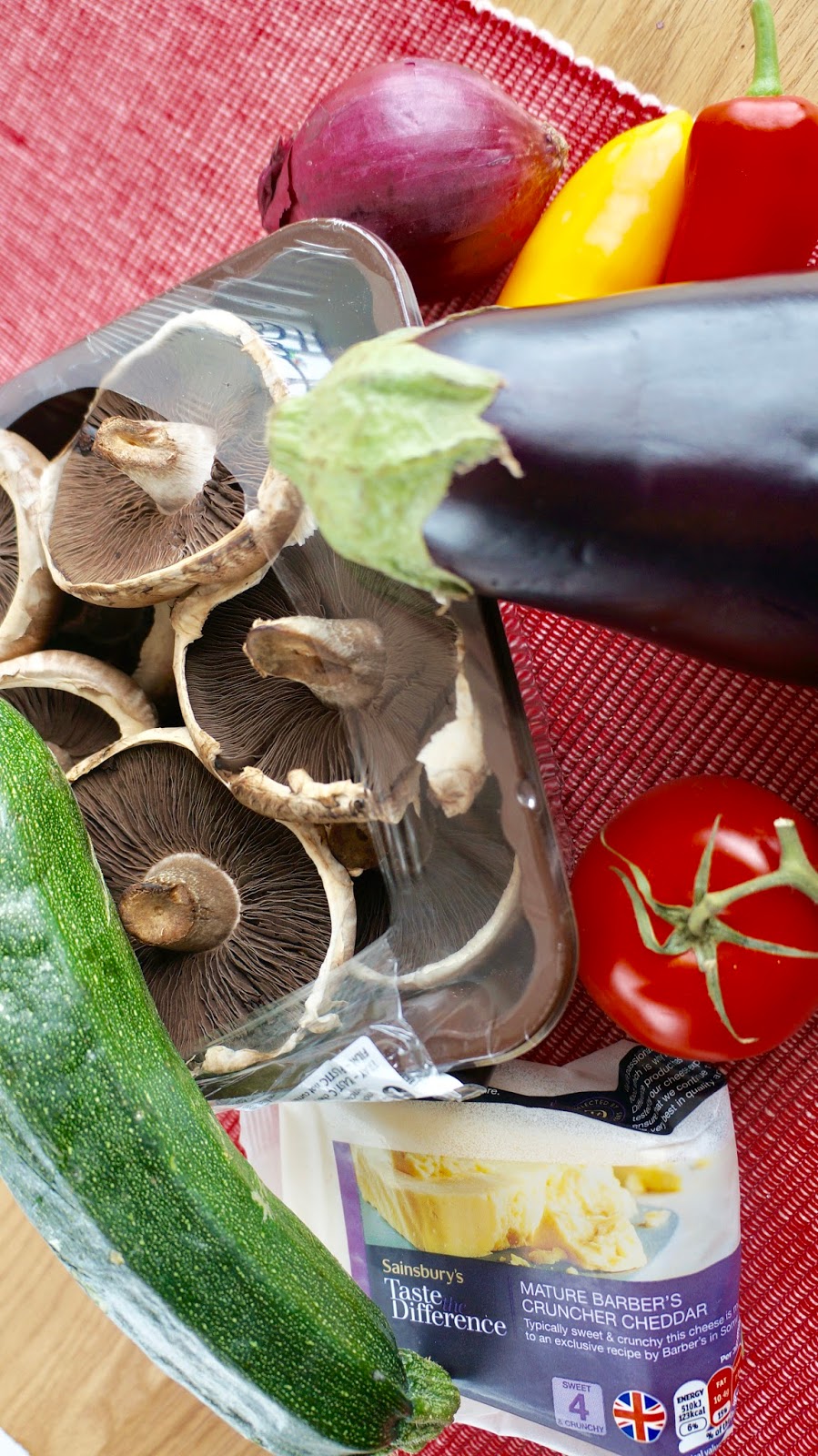
She did though, and then shared it with us all. Naturally. How kind of her to lay bare the family showstopper. It is essentially a layered bake with seasonal vegetables. Courgettes. Onions. Tomatoes. Peppers. Mushrooms. Fanny says it is one of the most delicious and rather time demanding vegetable 'assembly' dishes that she knows of. Clearly not suitable for general family meals (unless you happen to be the Rothschilds) but entirely suitable for entertaining. I take some shortcuts though as time is tighter and it's the chefs night off...

Fanny Cradock Gateaux Rothschild

I think Fanny, and perhaps even the Rothschilds themselves, would approve. Fanny laboriously cooks each vegetable separately in pans of foaming butter. Very French. It's important to keep them all separate for the presentation. I slice them thickly, pop them on a tray and roast them in the oven. Once baked, I layer them in a metal ring with alternate layers of a mix of cheese and breadcrumbs, before baking again. Fanny is very particular on the assembly. It must be onion first, then tomato, peppers and finally courgettes. In that order. My final rebellion is to include Aubergine, which I put first. Then, bake again and serve with a tomato sauce, which Fanny calls a fondue. This is how the Rothschild Family served it, and so must we. It was indeed fabulous. I don't imagine, however, that Fanny was ever invited to the Château for Gâteau again.

Fanny Cradock Gateaux Rothschild

Monday, 11 April 2016

Fanny's Garden - Get Fresh (at the weekend)

Eating fresh, eating local and eating seasonally all seems to make sense, but yet it is something we seem to have lost the know-how to do well. A bit like wearing our Sunday Best. Fanny was as keen as a locally smoked kipper to make sure we all chomped on fresh, local and in season produce - as well as in every imaginable colour. She even produced a handy wall-hanging to pop into our kitchens to remind us what was in season month-by-month. I'll pass on the John Dory, Duckling and Guinea Fowl she recommends for April. Not to be dismayed, she has LOTS of vegetable suggestions too. So, when fellow foodie and full-on Fanny fan, the lovely Jillian from Fresh Food Express sent me a huge box stuffed full of vegetables and other goodies, with a challenge to make some seasonal treats, I only had to skip into the kitchen and think 'What Would Fanny Do'? Well, ok, in all honesty it's all I ever think. And I always skip. Always.

Fanny Cradocks Fresh Food Express Garden

It was all a little lot like Ready, Steady, Cook! as I opened up the carefully packaged parcel... My box was bulging. Veggies and fruit galore from Pillars of Hercules Organic Farm in Fife, my favourite hand churned butter (Mrs Millar had clearly been busy), Arbroath honey, pickles, Arbroath roasted coffee and even some resurrected Scottish Heritage grain flours - Beremeal and Peasemeal - shockingly not from Arbroath. The big question would be, would I end up with Red Tomato on my face or as glad as a Green Pepper? Or was it the other way round? I can always blame Fanny if it all goes horribly wrong, can't I?

Fanny Cradocks Fresh Food Express Garden

Beremeal is something I've tried before, following a memorable but sadly brief jaunt to foodie-heaven Orkney last year. I've been making traditional recipes like bannocks and scones, but wondered, would it make a nice pastry? It has quite a distinctive, nutty taste of days gone by. I used some of the expertly patted, expertly melted butter and a little hot water to bring the flour together to a dough, and lined some mini brioche tins. I fancied a nice deep tart. Well, who doesn't? Sorry, I know it's flan, Fanny despised the use of the word 'tart' in the kitchen, and in the bedroom. It took a bit of coaxing and patching into the tins but then baked blind well. I made Fanny's Leek Tart Flan filling - simply some gently cooked leeks from the box with beaten eggs, a little cream, cheese, and seasoning. Baked again, they turned out, well, just like Fannys (might've). The pastry turned out kind of like a savoury ancestral biscuit in texture and taste.

Fanny Cradocks Fresh Food Express Garden

Fanny would of course always and every time think of a buffet as the answer to delight all. The contents of the oh-so-welcome box just shout Fanny's Garden to me - some of her classic vegetable accompaniments to be clear. I'm not sure what those dedicated organic farmers would reckon to their potatoes being gently steamed, mashed, coloured green and piped into proud peaks to resemble  'trees' (be polite, we all know what we are all really thinking)? The courgettes also get steaming, before being stuffed with breadcrumbs and cheese, and baked. Same for the onions, but they are simmered in gently boiling water first. Then give them a good stuffing. Fanny normally says NEVER to cook vegetables in this way of course. Never boil. Except for this dish, seemingly.

Fanny Cradocks Fresh Food Express Garden

Every display Fanny ever turned her hand to had a few elements of bonkers-ness whimsy. So what better occasion than to trot out her lovely lemon pig creation? Oink. Just a couple of cloves studded for eyes, cocktail sticks for feet and a slither of peel from it's rather considerable underside (I'm already imagining it is real) cut to form ears and a wiggly tail. Fanny never had a carrot sharpener to my knowledge, but the one I have does make gorgeous edible flowers for decoration. Fanny would no doubt spend hours getting Johnnie to work on hers. One of the blood oranges from the box becomes a basket, naturally. Every display should have a basket. Ever the seasonal-freak I've also been foraging recently for Wild Garlic, which made a lovely butter to go with everything. So, do I win? Will Ainslie Harriet say I've done well? It's seasonal, stuffed with Scottish produce and fresh. And brightly coloured. Surely the lemon pig is worth a prize on it's own.

Fanny Cradocks Fresh Food Express Garden

Fresh Food Express sent me this box of goodies to play with, and they would also like to send you something similarly seasonal - all you have to do is enter using the Rafflcopter thingy-ma-jig below, leave a comment on this blog post and gain a few extra entries while you are at it! Don't panic, you don't have to colour your potatoes green. Fresh Food Express will send you your prize directly, if the Rafflecopter thingy-ma-jig selects you as the winner. Ready, Steady, Fanny On! (UK entries only folks)

a Rafflecopter giveaway

Monday, 11 January 2016

Feel the Appeal of the un-Real Meal

Fanny often wants to convince us that she is the undeniable, bona fide, irrefutable real deal when it comes to recipes, techniques, knowledge and skill. This is the entire basis of the partwork series, she is sharing her veritable gifts with us. At times she is blatantly blunt in telling us that her way is the right way. Other times she is, honestly, a little more subtle but absolutely as concrete in her message. For a simple dish of Shepherds Pie she takes us back in time to Old England to discover what this traditional pie meant to our ancestors, but makes it evident that we have been making it wrongly all these years by the simple addition of a single word. This is Fannys' Real Shepherds Pie.

Fanny Cradock Real Shepherds Pie

Well it would be if I wasn't insistent on fiddling with the recipe, twiddling out the meat and tiddling it up for vegetarians. Fanny uses a tangible mixture of cold, cooked lamb or mutton and finely minced lean gammon as the base for her pie, I use a packet of ready cooked Puy Lentils. So handy, and I think still valid, still in the spirit of the dish - a quick transformation of so-called leftovers and cupboard staples. It happens to be International Year of Pulses too, whoever knew that such a thing should exist. If Fanny were here in 2016 I am sure she'd celebrate with a special book. Or two. Or three.

Fanny Cradock Real Shepherds Pie

Fanny mixes her meat with a grated onion, freshly milled parsley, a little stock and seasoning, so do I with the newly elevated, internationally celebrated, legitimate lentils. I was clearly 'keeping it real' during the preparation too, as the grating of the onion resulted in streams of actual tears in the kitchen that simple chopping alone would not have uncovered. It seems a little odd to grate them in the first place and not cook them, but was we know Fanny is indubitable, so I don't question it.

Fanny Cradock Real Shepherds Pie

It's all seemingly fairly standard so far, no hints of the 'real' nature that Fanny promised with the pie. The filling goes into a dish and Fanny urges us to get on with the topping. Surely just mashed potato? Everyone knows that a Shepherds Pie is topped with mashed potato, don't they? Think again, authentic fans, Fanny has some flour up her sleeve. She does mash up her pre-prepared steamed (of course, never boiled) potatoes, adds some butter and boiling milk. Then she beats to a smooth paste before working in the flour to create a pastry paste consistency. She rolls it out and tops the pie with it. I was hoping for piping.

Fanny Cradock Real Shepherds Pie

Fanny calls this Potato Crust. She finishes it off by marking it in a criss cross fashion with a hot, wet knife in trellis lines. Then a quick brush with egg wash before the oven. The pie emerges well risen, and quite, well, crusty looking. It's an original texture, both fluffy and crispy and tucked underneath are the simply flavoured pulses, shining and singing among the parsley and the sweet grated onions. All-in-all it's a delightful pie. We only have Fannys word that this is the truly defacto real deal. I'm happy to just enjoy the pie. Who would question Fanny anyway?

Fanny Cradock Real Shepherds Pie

Thursday, 8 October 2015

Veggie Fanny

Fanny Cradock has been guiding me, teaching me and frankly scolding me for a few years now as I twist and turn her bonkers creations into meat-free celebrations, but until now she has never even muttered the V word. Not even under her breath. Not even as she wallops me with a perfectly ordinary spatula. However, today she has gone all out and labelled an entire section in the partwork as 'Vegetarian Rice Dishes'. It's all come as a huge surprise to me. Were there many vegetarians around in the 1970's? What were they eating? Was Fanny responsible for shaping restaurant menus up and down the land with that one, solitary veggie option that would stare out at us?

Fanny Cradock Lentil Rice

Ask most veggies what they hate to see on a menu and the answer invariably is Risotto. I never know why, I love it, I make it a lot and even enjoy it from time to time when out. Okay, I don't want to see it all the time, and it really is a lazy option for most restaurants, but done well can be magnificent. Fanny's first trio of vegetarian dishes is a Mushroom Risotto. Found on menus everywhere to this day. She makes it in a very traditional way, just as we all would. No strange colourings or additions at all. Perhaps Fanny wasn't so bonkers after all?

Fanny Cradock Lentil Rice

For her second dish, which she particularly recommends as a 'super dish for Facto-Vegetarians' (what had she taken?) is a mix of cooked marrow, cheese, eggs and rice in a mound and covered in butter and breadcrumbs. She calls it inelegantly 'Filling Rice and Vegetable Dish' and notes that it tastes a great deal better than it's rather ordinary and pale appearance would suggest. Or its name. Thankfully never to be seen on any menu ever. Not to worry, it's Fanny's third choice that grabs my attention. Firstly, yes, because it's another veggie cliché but then because I remember just how much I like and yet mostly forget about lentils.

Fanny Cradock Lentil Rice

Fanny refers to this dish as Pakistani Khichdi, and of course calls the lentils Dhan Dhal. She never misses an opportunity to teach us in her worldly-lingual ways. She leaves the authenticity here I think, preferring her own method of cooking the rice to the classic Pakistani way, which she says is much easier. If only everyone would just do as she says, these peskily traditional women from Pakistan included. Sweat it out. The rice technique that is. Fanny washes the rice and lentils together, then swirls them in a heavy, roomy pan of water with sliced onion, salt and turmeric. She then 'sweats until tender', which I presume is instruction for the rice (4 minutes on the stove and then finished off in the oven) and not me?

Fanny Cradock Lentil Rice

It emerges light, fluffy and smelling tremendous. It's all just the one 'turmeric' colour now. Fanny finishes it off with a slosh of vegetable oil mixed in to make it glossy and serves with her favourite sweet and hot chutneys. My favourite is not a chutney, but Chilli Burns from the ever lovely Galloway Chillis, which adds a real kick to this simple but delicious dish. I managed to scrape just enough from the bottom of my jar to drizzle, must buy some more! Who knew Fanny was aware we vegetarians even existed? Well almost, she decorates hers with borders of Prawn Toast. Small steps, we clearly can't expect miracles.

Fanny Cradock Lentil Rice

Monday, 5 October 2015

Researching Realistic Rice

Fanny Cradock turns her overly attentive eye to the subject of rice for part 25 (don't worry Fanny fans, we still have 55 parts to explore together...) and the many ways to cook with it. Fanny wants us to take a 'realistic' look examining its vast culinary potential. Judging by previous parts, we won't yet be cooking all those potential dishes, but merely laying down the foundations. Fanny gives a rundown of rice use throughout the globe, and reminds us readers it's very much like our potato - a basic and economical food. Thanks Fanny. She does hint that if we do proceed we will be able to make rice dishes for MIPs. Forget VIPs, for Fanny they are Most Important Personages.

Fanny Cradock Rice

Fanny tries her best to give some historical context to rice, but generally finds that every continent has claimed to be the true origin of rice at some point. So, she just goes with what she prefers... For Fanny, the 'nicest' legends come from the East, where rice is a symbol of life and fertility, hence, Fanny claims, why we throw rice at wedding couples. Not really Eastern then. One thing Fanny says is for sure is that every cook should know at least four ways to cook rice in order to elevate themselves one rung higher up the now enormous culinary ladder she has labelled 'Perfect Cookery'. I feel ready for the challenge, so let's go fourth. Erm...

Fanny Cradock Rice

Sweating. That's Fannys first foray into rice. She chooses ordinary Patna rice (she mentions it from time to time, but has only now explained this is 'common' general rice, or Long Grain as it is now known), but for super extravagance she would choose Wild Rice from the swamps of Florida. It's not clear if she forages for it herself while there. Fanny melts some butter, chops an onion, and flings them together with the rice. Stirring for exactly four minutes. She then turns it into a casserole dish, covers wth stock, slips a lid on and pops it into the oven until the liquor is absorbed, around 20 minutes. Technique two continues to cook on the stove top, adding the stock gradually, letting it absorb and adding more. We know this now as Risotto style, but Fanny calls this 'Fried Rice'. Confusing.

Fanny Cradock Rice

The 'fried' rice is sticky and gloopy, but full of flavour while the sweated version is plump and swollen. Different colours and textures. Fanny knows that this is not always desired, so gives two basic techniques for 'grain-separate' rice too. Fanny again uses Patna rice, but also says we can substitute with 'health' rice, which is brown. She haves it into rolling-boiling salted water, stirs it once and lets it simmer for exactly eleven and a half minutes. Timings are very precise for rice. That's it, it should be absolutely grain separate. It is. Technique four is to boil it for only 6 minutes, then drain it and shove it in the oven with some stock until it is absorbed. Fanny says this is ideal for serving with kebab meats on skewers. It's not as plump as the plainly boiled version. I'm not sure what the connection to kebabs is.

Fanny Cradock Rice

And there we have it - four basic techniques for rice. And, four very different results. The sweaty, swollen versions would be great with drier accompaniments, while the perfectly separate ones with wetter things. Take your choice. Once we have the techniques off pat(na), Fanny says we can reach even higher by switching up the chosen liquor as well as the chosen rice. She sometimes replaces some of the water with stock, and some of the stock with sherry, brandy and wine. It probably ends up with the rice being entirely simmered in vodka. Fanny reminds the less experienced among us that red wine should be used if serving with dark meat and white with light. Continuing to remind us to be realistic with our rice however, Fanny says these should only be tackled by highly ambitious cooks in the 'top flight' of rice cookery, and this confidence can only be gained gradually. Thankfully no MIPs or VIPs are expected anytime soon, so I can stick to the basics. Perhaps Fanny will give me a leg up that ladder sometime soon...

Fanny Cradock Rice

Thursday, 26 March 2015

You say To-may-to, I say To-mah-to

Fanny Cradock opens Part 18 - which focuses on Exciting Winter Vegetables - with a plea. Her plea is for us to make good use of British vegetables, which are after all the finest in the world, even if they have 'suffered just a little bit by the time they reach our doors'. Fresh vegetables, local and in season is her campaign, cooked properly, naturally, which means the Cradock way. She was very big on seasonality, even producing a hanging wall chart to be hung in every kitchen as a constant reminder of the monthly expectations. Additionally Fanny begs us all (with some humility) to 'put an end to boiling' and over-cooking. Escoffier has taught us, and Fanny reminds us, that no-one can cook limp, flabby, inferior vegetables and expect to achieve perfect results.

Fanny Cradock Tomatoes

Vegetables should be fresh and lively. Fanny gets hers down the market, but the poor barrow boys' knees must start to jitter when they see her approaching. You see, Fanny insists on fondling the merchandise, despite calls to 'not handle the goods, Madam.' How else can housewives be sure they are buying vegetables in perfect condition? Fanny is wise to the sneaky market traders trying to shovel shoddy vegetables into bags from behind the barrows, so always says 'Please show me what you want me to buy before putting it in my bag.' If they refuse, Fanny recommends walking away. I have no doubt she did on a regular basis.

Fanny Cradock Tomatoes

So, shop local, in season, and choose well is the campaign slogan. It is odd then that the first recipe in this part that Fanny wants to share is one she chooses to showcase out of season produce. The tomato. By her own reckoning, British Tomatoes are readily available in the Summer, and only imports are available in Spring (at least in the 1970's). She ploughs on though, pairing it with an onion and some cream to really showcase it's erm, natural favour and freshness. Perhaps this was all that was in her bag on returning from the market when her requests to cop a feel were refused?

Fanny Cradock Tomatoes

This is a favourite side dish for Fanny and she is excited to share it with us. This must be why she is so confused. Poor Fanny. Let's play along. She selects an onion, which should have a paper thin skin that 'practically rubs off' when you touch it. Any green shoots poking out, please reject it as 'old and on-the-bolt' only suitable to plant and grow for flower decorations. Slice your perfectly rubbed onion finely and add it to a pan of hot oil over a low heat. Slice your tomatoes in half and make criss-cross cuts over the sliced surfaces and place on top of the onion. Add a few sprinkles of herbs and cover the pan completely with a lid or tight fitting foil to allow the vegetables to poach and fry very gently until tender. After seven minutes, peek in and turn the tomatoes over, returning the pan to the low heat to continue cooking.

Fanny Cradock Tomatoes

All that remains to be done is to 'swill in' some cream and allow it to heat through without boiling, before transferring the dish to the table. Fanny uses real (of course) very thick cream, I have chosen soured cream. It may be a reflection of my mood. Fanny serves this side dish with triangular croutons of bread. We've made that together in the previous part. I have to be honest, it is an odd little dish, but perfectly tasty and presentable. Hardly an 'exciting winter vegetable' to kick off a campaign though is it? Certainly not boiled and limp. In season? Doubtful. Well, at least the cream is British!

Fanny Cradock Tomatoes

Sunday, 21 September 2014

Fannys Freeze Expertise for Canadian Fleas and Portuguese Soup devotees

Fanny Cradock's didn't use her weekly Cookery Programme partwork to update any of her recipes or styles for the modern age of the 1970's. Instead she reinforced her traditional, unwavering sense of 'proper' cooking and presentation, with little regard for how people were living or eating at the time. The partwork was her opportunity to collect together everything she knew and to show off to her readers her years of experience and skill, so that they too could in turn show off to their neighbours and husbands bosses. If ordinary housewives wanted to learn to cook then they should learn the Fanny way, and be grateful. However, some eight years after the series was published, Fanny released a book of freezer recipes in line with the then current boom in availability of home freezers. The recipes for Portuguese Potato Soup and Canadian Raisin Pie from the Bill of Fare, or menu, for the Jelly partwork appeared again.


The freezer cookbook, 'Cook First, Freeze Afterwards', aimed to do what Fanny had never done before - modernise. Fanny even proclaims within the pages that 'housewives' may be of either sex! Progress! It's a fascinating book. Not just for the recipes, but for the endless narrative that accompanies them. It doesn't appear as if Fanny had an editor, or anyone willing to cut a word out. On almost every page she spits out venom at the frozen food company that had engaged her to research and produce a range of meals for them, only, after several years and great personal expense, to renege on the deal. Fanny tells the readers that this resulted in her losing an annual income for £50,000 - a significant amount back then. But fear not, as Fanny has not wasted the endless rehashing and freezing of her recipes, they appear collected in the book of course.


The Portugeuse Soup, or Calde Verde, is a simple affair, using a technique I hadn't heard of before. The recipe calls for the juice of a small onion. Fanny doesn't bother with any instructions to obtain this juice, so I assume I should grate it, place it in muslin and squeeze the juice through. All I need is one teaspoonful which a small shallot seems to yield. It's a bit fiddly, so better be worth it.


Other than that, the soup, which even Fanny refers to as 'sounding dull', is made from simmering three large, old potatoes in a pot of stock until tender. The onion juice is added and stirred through, before hairlike slithers of cabbage are plonked in. The heat should then be raised to a fierce, noisy, bubbling boil, for only three minutes before serving. In the freezer book, the instructions don't vary too much - but the soup is frozen before the cabbage is added. Cabbage, says Fanny, does not like life in the deep freeze and is best added fresh once the soup is defrosted and reheated. So there you go, years of research led to this, and a small fortune lost.


Fanny tends to use the Bill of Fare that ends each partwork to introduce recipes from foreign lands that would no doubt wow even the most staid of dinner guests. The Canadian Raisin Pie is one of these. In Scotland, we'd call this a Flea Cemetery, but that wouldn't be nearly as exotic or sophisticated sounding enough. The raisins are cooked in water, with lemon juice, lemon zest and brown sugar until they are plump. Then a little bit of magic is added. Potato Flour. Fanny mixes it with a little water and instructs it to be stirred 'like mad' after which time the raisins will be swimming in a thickened, clear sauce. It's actually like a raisin jam, all gooey and sweet.


While the raisins are left to cool, I make some sweet shortcrust paste to line a pie dish, and a lid. I even have enough paste leftover to fashion (by hand) a Maple Leaf. How fancy, who wouldn't be impressed by that? The raisin mixture is piled into the pie dish, topped with the pastry lid, dusted liberally with icing sugar and baked for 30 minutes. The version in the freezer book is no different at all, Fanny just adds the instruction that it can be frozen after baking. Years of research. Bank accounts emptied. Freezers full. Both dishes are packed with flavour despite their sparse ingredients - the trickle of onion juice transforms the soup and the magical potato flour shifts the gears of the otherwise simple pie. I'll freeze some and see if Fanny is right. How wonderful would it have been to delve into the freezer aisle of the local supermarket and pick up some Fanny Cradock ready meals though - you can imagine the elaborate creations with lurid colours and ingredients. Forget Lasagne or Cottage Pie, Fanny would've given us rich Casseroles with Green Duchess Potatoes and a range of her famous filled savoury and sweet omelettes. I can't imagine why the frozen food manufacturer decided against it in the end!

Monday, 12 August 2013

Pissaladiere - Private: Provence Pastry for Professionals

"The English word 'tart' has such dreary connotations for both sex and cooking!

Fanny may not want to call a 'Flan' a 'Tart' but she is keen for us to take a peek behind closed doors normally marked 'Private', she wants us to peer through windows where we are 'not meant to be' and even encourages us to pop on our 'cloaks of invisibility' (will JK Rowling be joining us?) to enter Part Two of her weekly Cookery Programme - the key to Sweet and Savoury Flans and Tartlets. Oh, so tartlets is ok, just don't call a tart a tart.

Lesson one - professionals never make flans with doorsteps around them, they never fold pastry paste into parcels and they never use crusts to hold pastry paste down during baking. Got it. They do however use rolling pins (phew) and dried beans, lentils or rice with greaseproof paper to hold the paste down. This is fine, this is how I have been making pastry for years, this is how my mum taught me. Hang on though, I think Fanny and I may be about to fall out - the recipe for shortcrust pastry for this Onion Flan (and all Fanny's flan recipes to come it seems) uses self raising flour...


Even as I am following this I am sure this time that it really is a typo, it can't be self raising flour in shortcrust pastry, it just can't be. After sifting the flour into a bowl, Fanny tells me to 'gather my fingers up like a posy' (I am not at all sure why or how), add into the centre the very cold butter, very cold 'lard' (substituted with Trex by this very cool vegetarian), grated Parmesan, salt and pepper and start cutting away at the mixture with two knives (one in each hand). I add a little very cold water now and again and keep chopping and cutting and drawing in flour from the sides until the mixture forms a thick, light pastry paste. Fanny tells me to roll it together and pop it into the fridge for at least an our and maybe as long as a week... I think she means it will happily stay there for a week.


After an hour, it certainly feels really soft and fluffy, very different to the shortcrust pastry I normally make, which is buttery and crumbly. It is stretchy and pliable and rolls out really well. Is it the self raising flour, the chopping or the mix of fats? None the wiser, I continue to roll and line my 'flan' tin, and prick the base with a fork.


I'm expecting this to be where I reach for my greaseproof paper, and baking beans, but no, Fanny insists I bake this one 'raw'... The filling for this Onion Flan is basically Onions and Garlic, no secrets here. I gently fry the sliced onion and crushed garlic until tender but not brown and add it to the raw 'paste'.


I am meant to add a trellis of anchovies and olives on the top here, but both are off the menu for me so it's straight into my oven for 30 minutes. I wonder if the pastry will puff up, but actually it emerges looking (and smelling, that'll be the Parmesan) great, cuts well, isn't puffed up, didn't shrink at all (is this the reason for the self raising flour?) and above all tastes delicious. It's a simple tart, I mean flan, eaten without dreary connotations or indeed thoughts of sex but I can't help but still wonder if that flour was a mistake.